Drishyam (2013)

Drishyam

I started to watch Drishyam late one night intending to just watch the first half, but found I couldn’t tear myself away until I’d seen all 2 hours and 44 minutes of the film – it’s that kind of movie.  Although it starts simply enough by drawing a picture of a fairly conventional family, it develops into a fascinating thriller where it’s difficult to predict exactly what will happen next.  The very ordinariness of the family makes their reactions and those of the other characters unexpected, while the developments in the plot are surprising at every turn.  There are a few moments where the story falters a little, but overall it’s intelligently written to show the effects of a sudden crisis and how important it is for a family to stick together when faced with adversity. Great performances by all the cast and beautiful cinematography contribute to make Drishyam compelling viewing and it’s definitely one of the best Malayalam films I’ve seen recently.

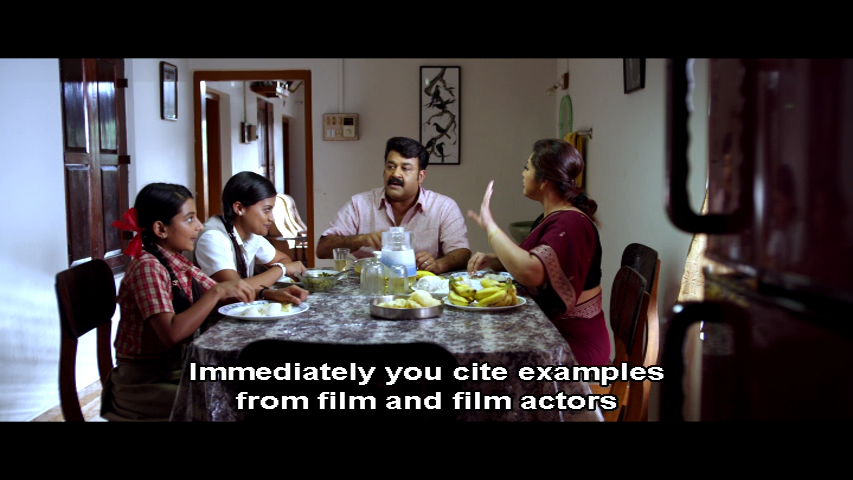
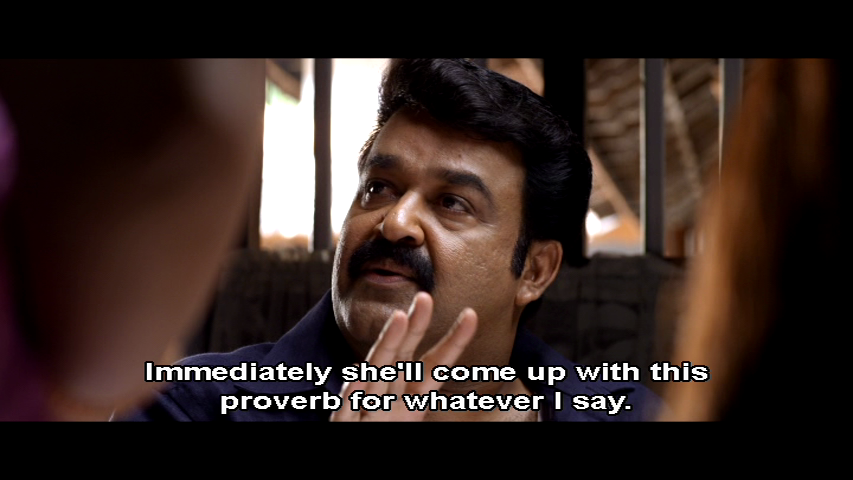
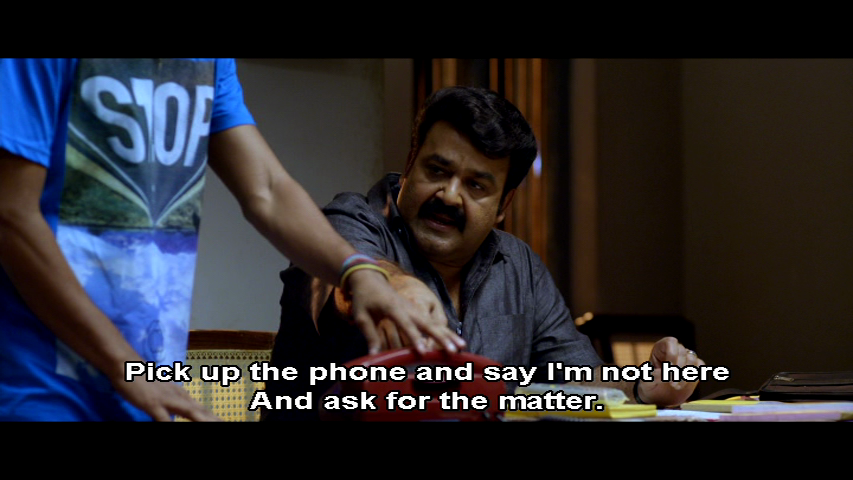
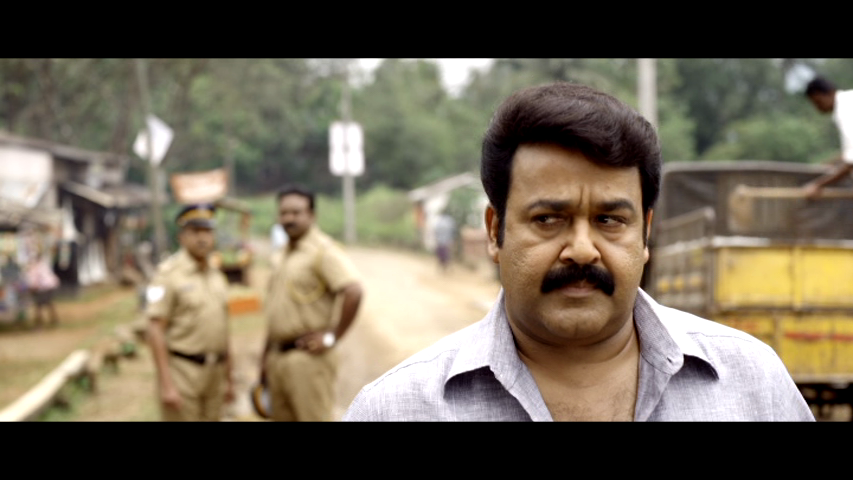
The film has a fairly slow beginning as writer/director Jeethu Joseph spends the first hour developing the characters of George Kutty and his family, focusing on their day to day interactions with each other and various other people they meet.  George Kutty (Mohanlal) operates a cable TV business in a small village near Thodupuzha.  He’s an orphan who never made it any further than 4th standard at school, but he has a wealth of knowledge gleaned from watching films all night long in his office.

DrishyamDrishyamDrishyamDrishyam

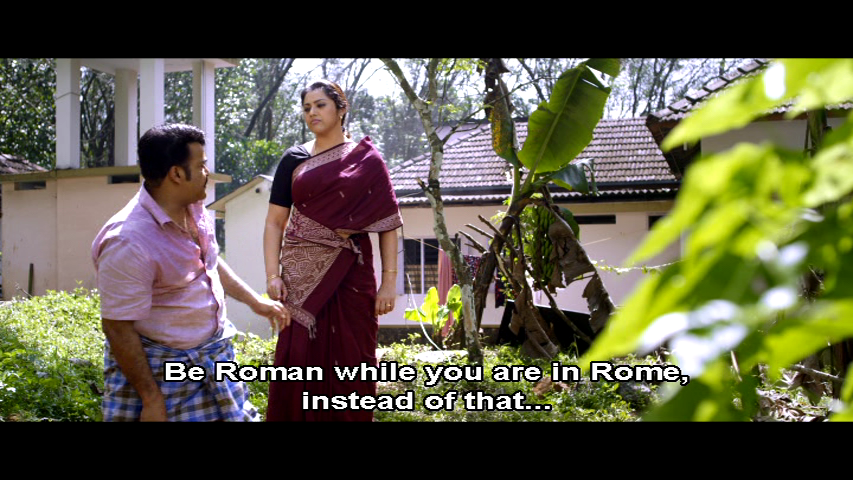
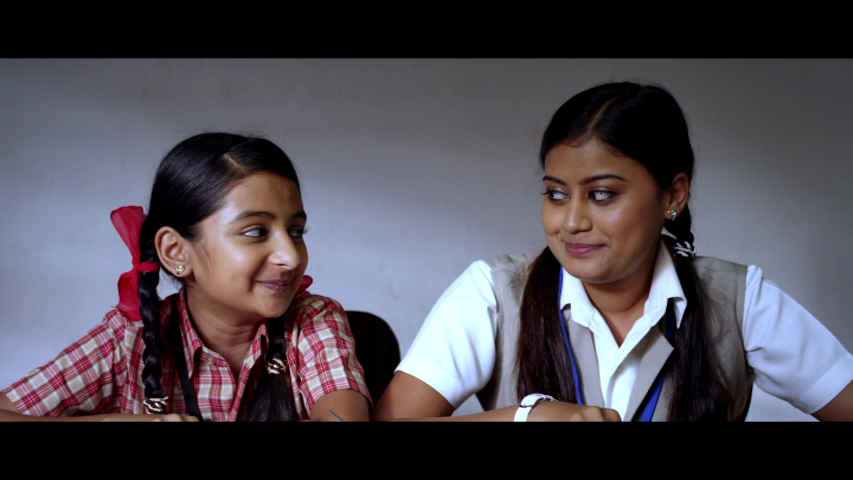
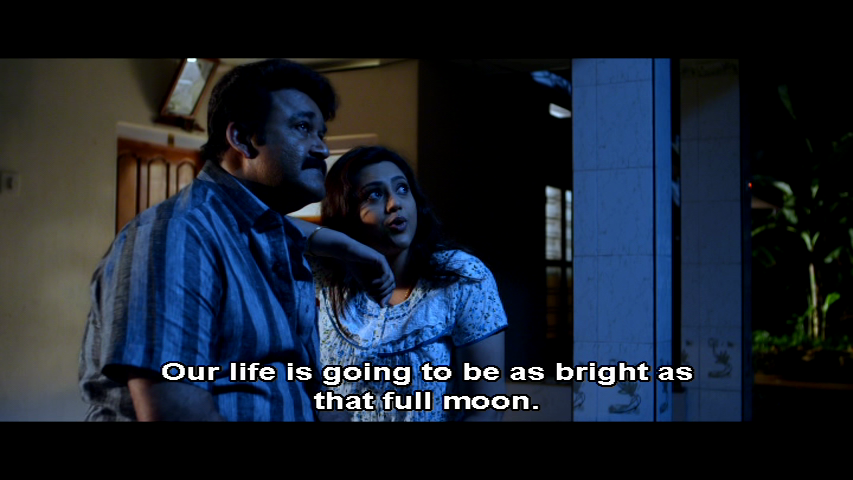
George Kutty is married to Rani (Meena) who generally seems content with her life despite putting up with her husband’s absences at night and his obsession with saving money.  They have two children, Anju (Ansiba Hassan) and Anu (Esther), and the family lives in a pretty house surrounded by banana trees and woodland. It all seems, if not idyllic at least comfortable and happy, although there are of course the dull routines and petty squabbles that occur in any family.  Jeethu Joseph uses each family member’s small ambitions to round out their characters and define their relationships while gradually building up the background for the rest of the story.  What also stands out is that despite the bickering and George Kutty’s somewhat eccentric lifestyle, there is a lot of love in the family and the marriage is built on very solid ground.
DrishyamDrishyamDrishyamDrishyam

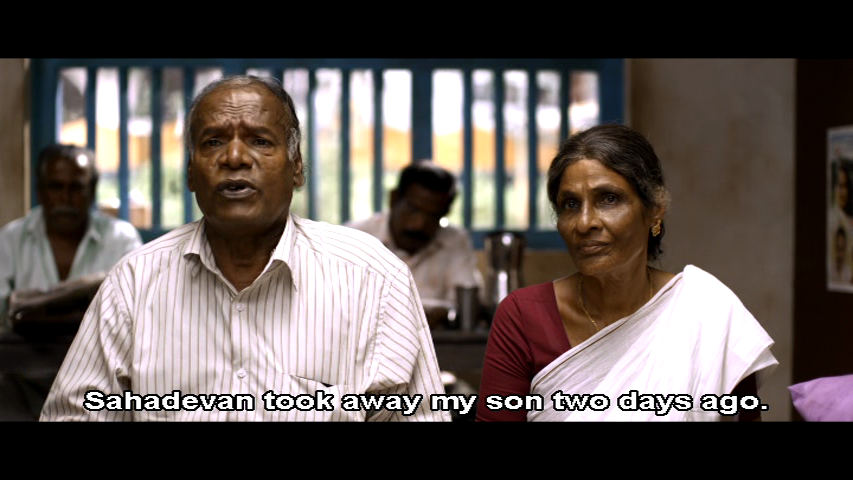
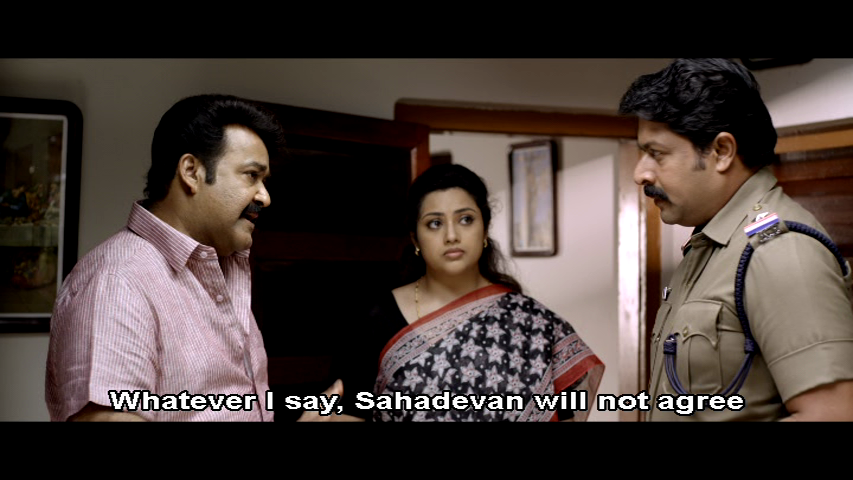
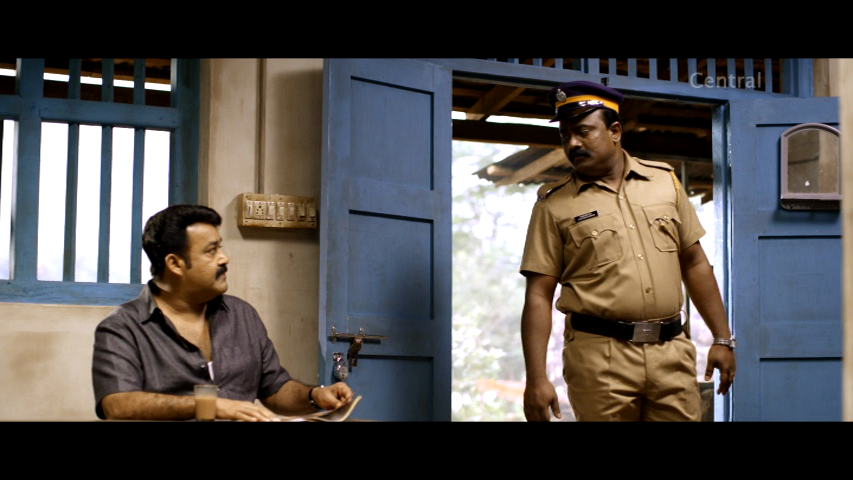
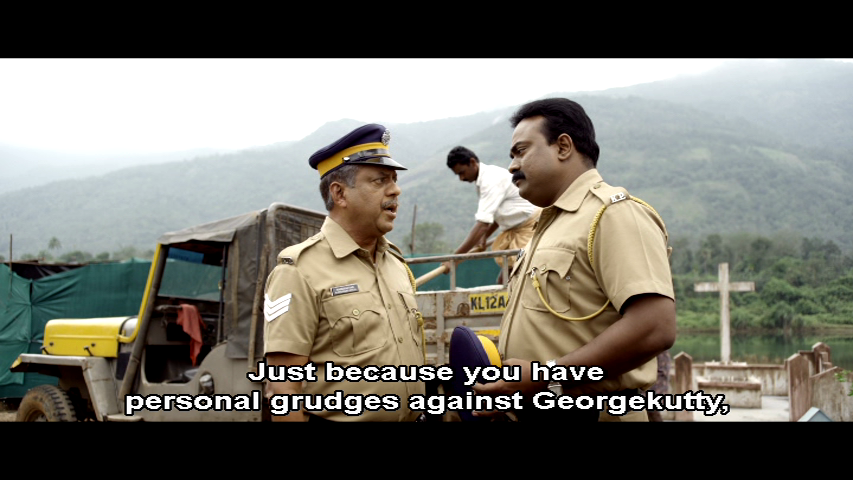
When not in his office or sitting at home, George Kutty spends his time in a local tea shop where he uses his knowledge of films to solve other people’s problems and if that just happens to antagonise the moderately corrupt Constable Sahadevan (Kalabhavan Shajohn), so much the better.  Sahadevan is a bully who extorts money through a variety of petty schemes and his character is best summed up by a brief scene where he happily steals money from a man whose child is in hospital.  Such a nasty man, and beautifully played by Kalabhavan Shajohn who does a fantastic job of displaying Sahadevan’s mean-spirited character and giving his emotions free rein. Part of the intrigue of the story is that this dishonest policeman becomes the unlikely pursuer of justice although his methods are definitely unethical and disturbing.
DrishyamDrishyamDrishyamDrishyam

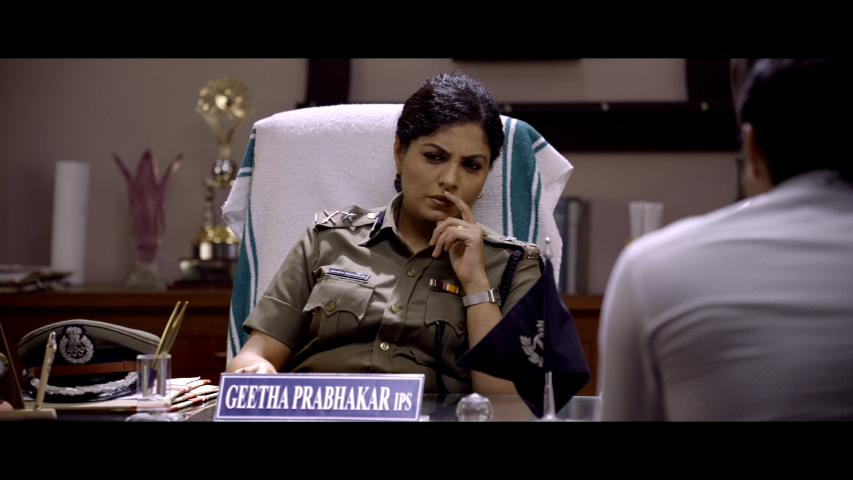
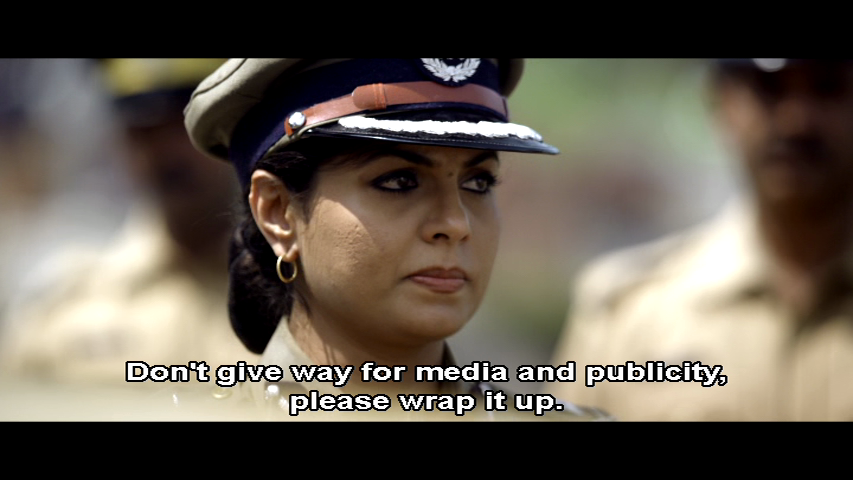
While the first half of the film introduces George Kutty and his family, the second half deals with what happens when the police suspect they are complicit in the disappearance of the Inspector General’s son.  Geetha Prabhakar (Asha Sarath) plays the part of the IG, and it’s a pleasant surprise to have a high ranking female officer as a main character.   Perhaps this is as a counterbalance to George Kutty’s firmly held belief that a woman belongs at home, but it also brings a very different dynamic to the film.

DrishyamDrishyamDrishyamDrishyam

Geetha is the one making all the decisions while her husband (Siddique) is the voice of reason and conciliation in the background.  The missing Varun Prabhakar (Roshan Basheer) is a typically spoilt rich kid, and there is the inevitable cliché here that rich kids are bad, while kids from lower and middle socio-economic backgrounds are always good and righteous. Geetha doesn’t believe George Kutty’s version of events and is determined to prove that his family are lying even though the local police officers (with the exception of Sahadevan) are convinced of George Kutty’s innocence and are reluctant to get involved.
DrishyamDrishyamDrishyamDrishyam

It’s mesmerising and even though the audience knows the true sequence of events, subsequent outcomes are impossible to anticipate as everyone brings their own needs and responsibilities into the mix.  Keeping to the thriller aspect of the film, there are only 2 songs in the whole film.  Both are well used to describe George Kutty and the dynamics within the family.  The first shows them on a happy shopping expedition while the second illustrates the change in family attitude when the police start to suspect they may have something to hide.  This is the first happy song which does an excellent job of summing up the family and their personalities.

Part of the film’s effectiveness is due to the high standard of acting from all involved.  Mohanlal is outstanding as are the two young actors who play his daughters.  Meena, Asha Sarath and Kalabhavan Shajohn are all also excellent and from Sahadevan’s brutal interrogations and shifty plotting to Geetha’s desperate attempt to balance her police persona with a mother’s concern for her missing son, the actions all feel genuine and typical of the characters involved. The dialogue seems natural, even with the barrier of subtitles, and the only apparent misstep occurs at the very end where Geetha appears to act a little out of character.  However it’s a small thing and does allow the story to be completely wrapped up Hollywood style.  Personally I would have liked a little less explanation and have been left to form my own theory, but that could be just me.

DrishyamDrishyamDrishyamDrishyamThe film is beautifully shot by cinematographer Sujith Vasudev and once the family is under suspicion the threat of prison is accentuated by the number of shots behind barred windows.  There are also some good contrasts between George Kutty’s family and the extended ‘family’ of the police and the lone outsider of Sahadevan.  By the end of the film a number of small throwaway moments are shown to have more significance than they appeared to have at the time, which shows just how effective good story development and intelligent writing can be.  Everything was there to be seen for anyone who looked, but the film shows that what we see can be easily manipulated and misinterpreted when it is outside expectations. Definitely recommended viewing but be warned not to start watching too late at night as it’s impossible to stop!  4 ½ stars.
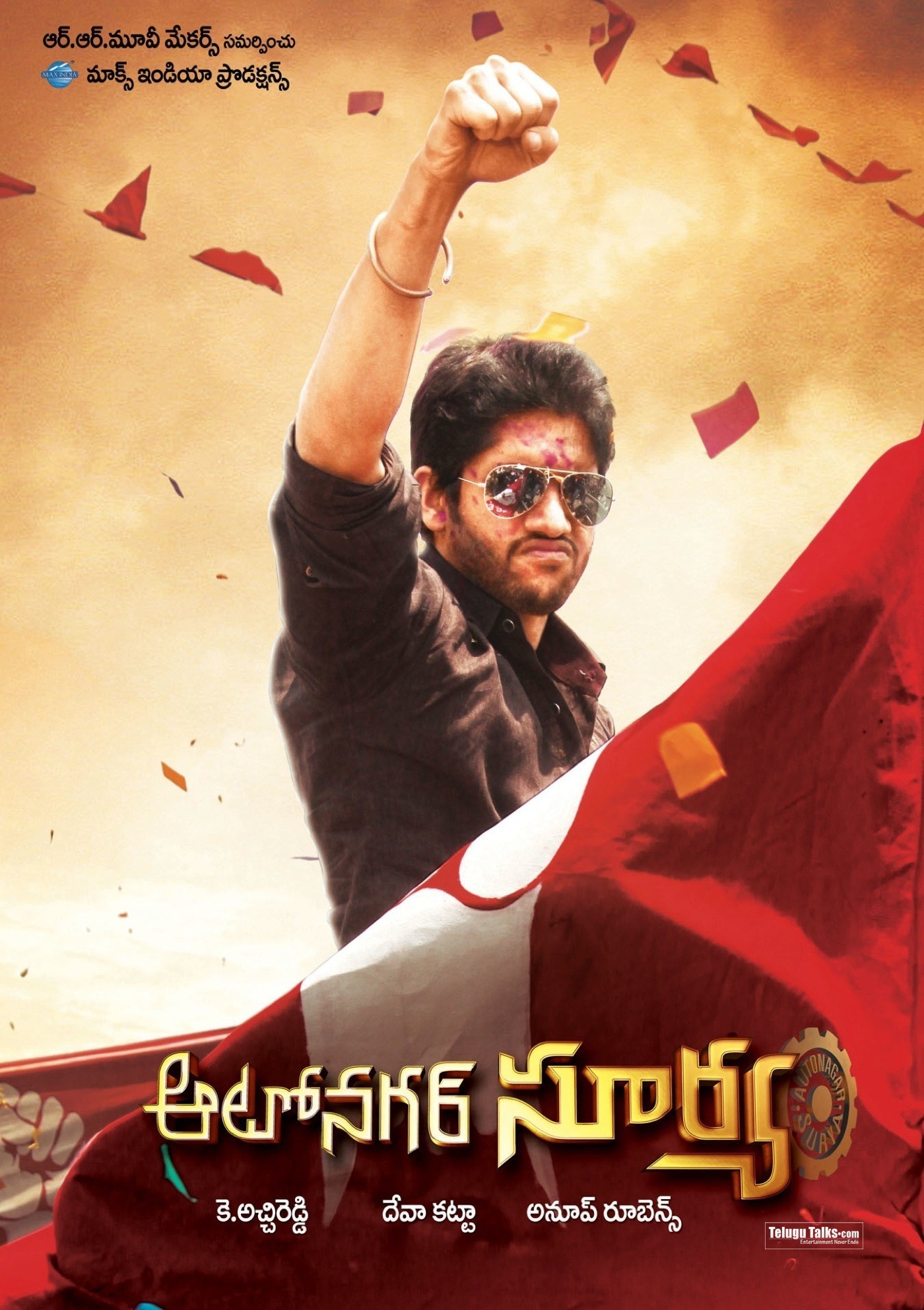
Autonagar Surya

Autonagar Surya

Deva Katta’s Autonagar Surya doesn’t seem to know quite what it wants to be and as a result ends up as a disappointing muddle.  There are elements of a message film with the ‘one man against the system’ storyline, but at the same time the film attempts a broader social commentary while following a standard mass entertainer formula – including the obligatory romance and fight scenes.   There is little of the subtlety Deva Katta brought to Prasthanam and the additions of Brahmi and Venu Madhav with a woeful comedy track certainly don’t help.  After watching the more recent Manam, where Chaitanya displayed improved acting maturity, it’s disappointing to watch his uneven performance here, particularly since the film focuses heavily on his character. In fact the best performances come from the support cast, including Surya’s group of friends and the assorted thugs and villains, but despite their best efforts they’re not enough to make Autonagar Surya more than a one time watch.

Autonagar Surya

The film starts off well enough – if a little on the violent side.  After an initial parade and explosion, where Chaitanya’s Surya is blasted into the sky like a cheap rocket, there is a flashback to explain who he is and how he got to be a human firework.  The young Surya is orphaned when an obnoxious thug detrains his parents when they try to intervene in a rape.  Surya ends up being brought up by his uncle (Sai Kumar) who has little time for the orphan as he thoroughly disapproved of his parent’s marriage, and Surya moves in with the auto mechanic opposite.  Cut to a few years later where Surya has grown up to develop an interest in all things mechanical and demonstrates an accompanying bad fashion sense.  Although to be fair, so do his friends too.  So far so good then, until he gets on the wrong side of the local union boss and ends up in jail for murder.

Autonagar SuryaAutonagar SuryaAutonagar Surya


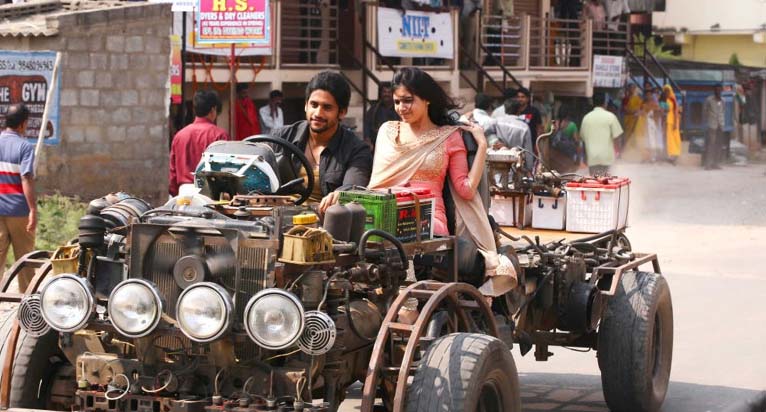
This turns out to have been a blessing in disguise, since while in jail Surya manages to study for a degree in engineering.  On his release, after a seemingly short time (5 years for murder?), he pressures his friends into helping him build a battery powered car.  However the union is still in power and worse still, his uncle is now the elected president and still has no time for his nephew (not his niece as suggested by the subtitles!).  However Surya has the hope of the downtrodden and a powerful vocabulary on his side.  With the help of his friends he decides to tackle the union thugs, but despite all his speechifying and rhetoric he basically employs their dubious tactics of fighting, kidnap and intimidation to achieve his aims.

Autonagar SuryaAutonagar Surya


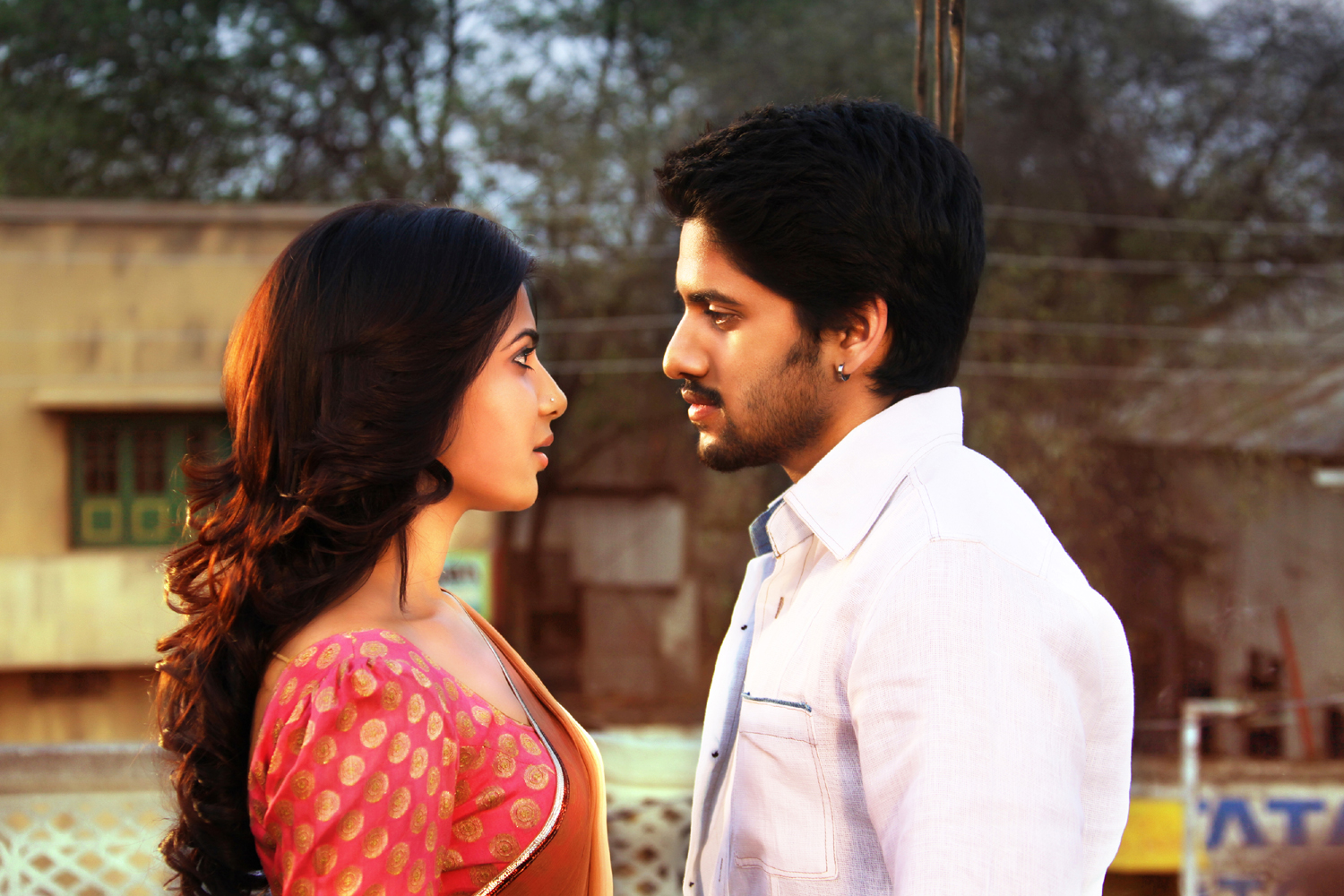
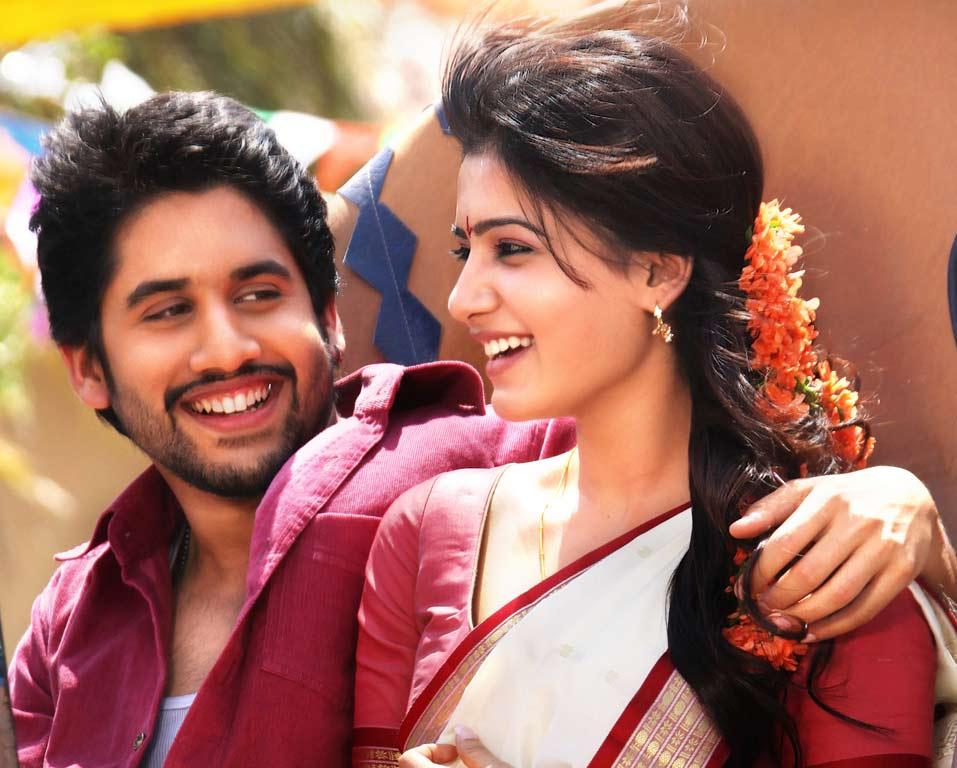
Sticking to the formula, there is a romance between Surya and his uncle’s daughter Siri (Samantha).  Samantha looks beautiful and has a couple of good scenes where she gets to explore her comedic side, but mostly she has frustratingly little to do. The love story is really only an excuse for a couple of forgettable songs with dull choreography and is dealt the death knell by a distinct lack of chemistry between Chaitanya and Samantha.  They seem to be more like best mates rather than lovers, and that probably would have made a more believable storyline too.

Autonagar SuryaAutonagar Surya

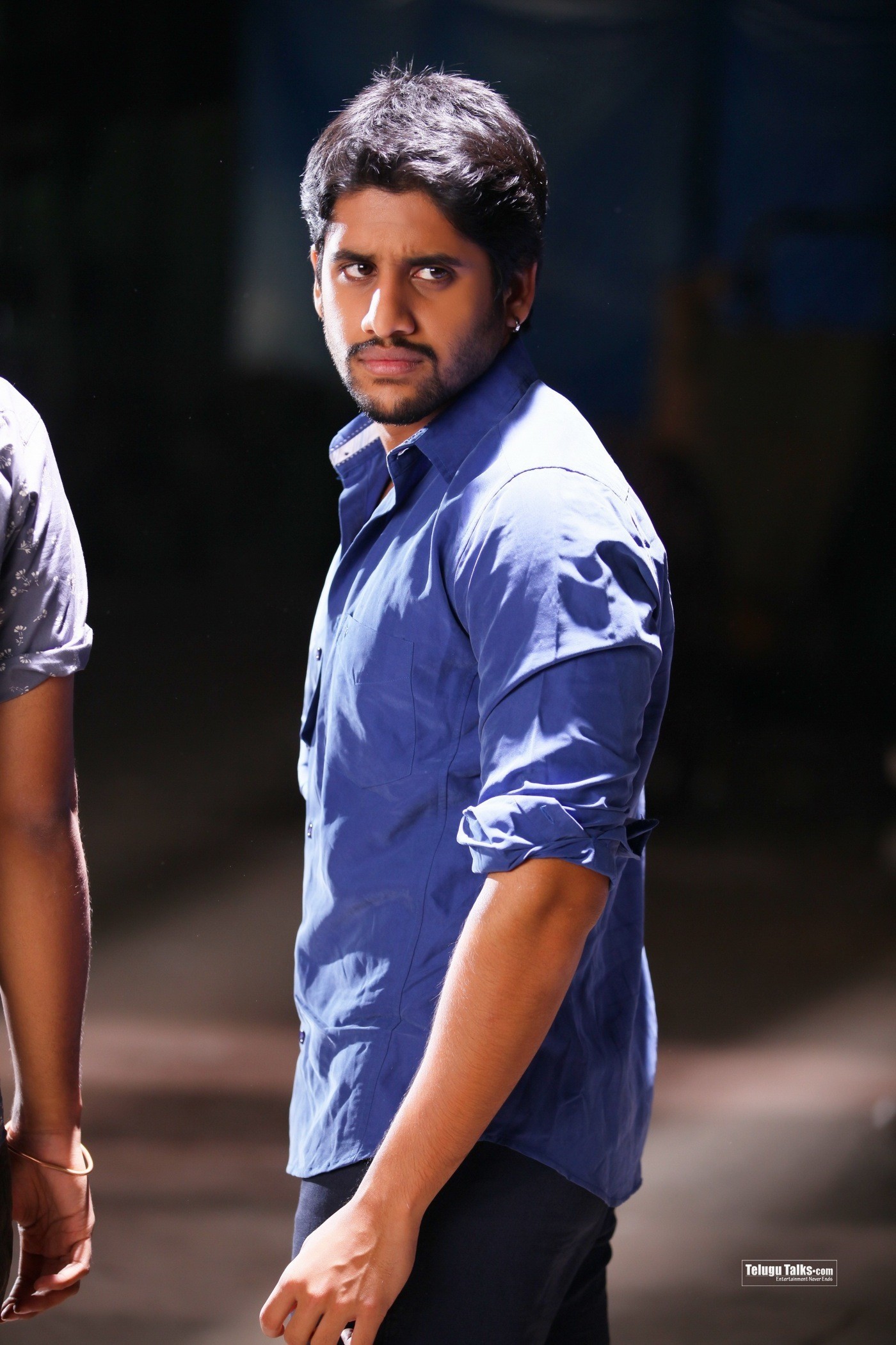
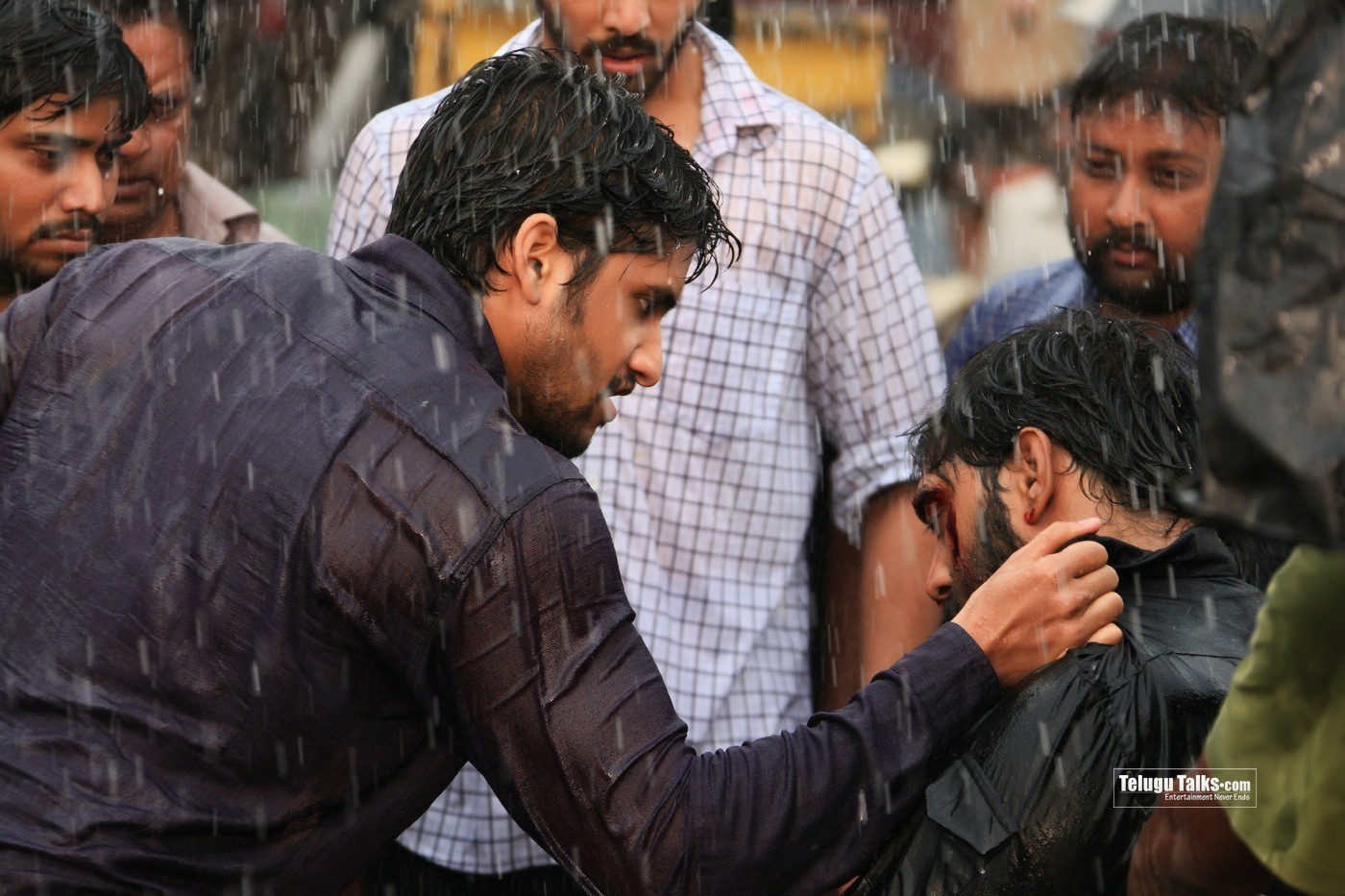
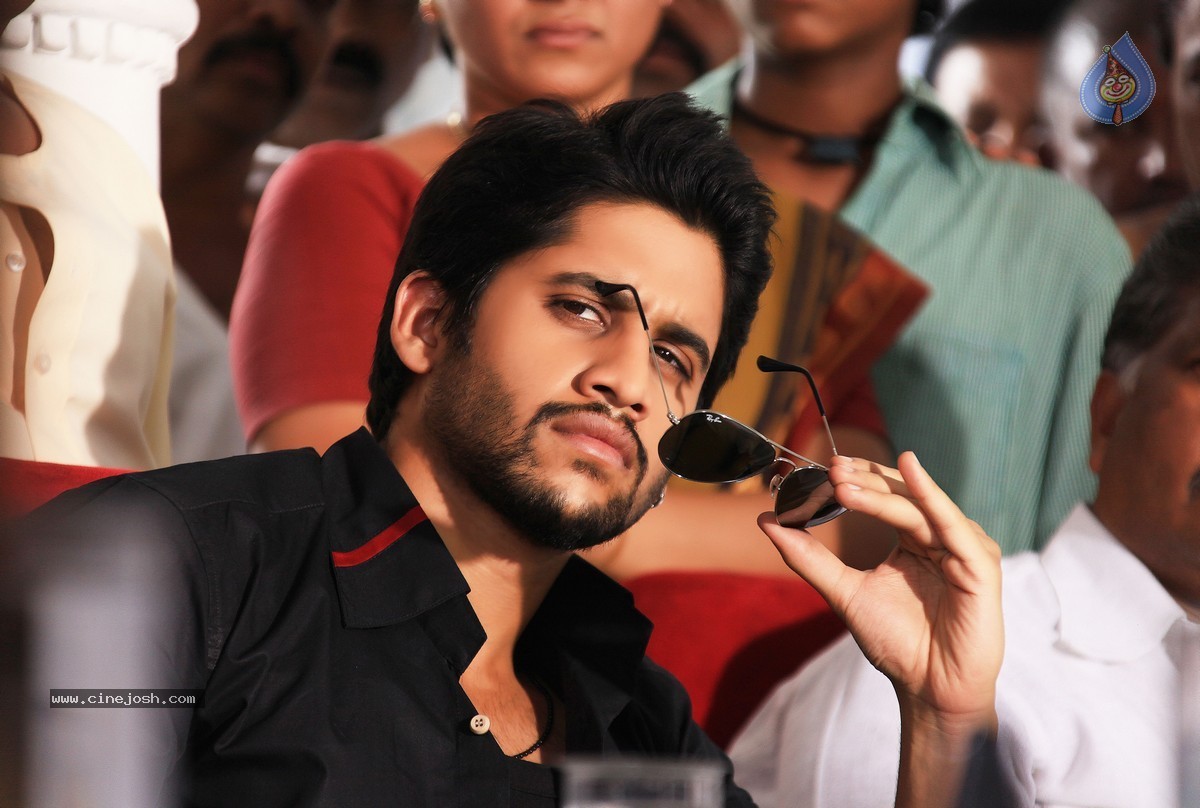
There are many fight scenes, particularly in the second half, which tend to be on the grisly side with plenty of spouting blood and the odd limb or two flying around.  The graphic fights seem to be at odds with Surya’s more intellectual dialogue relating to the human condition and it just doesn’t add up that such a technical and generally rational genius should also be a competent and vicious fighter. Chaitanya also doesn’t quite look the part, as he seems too young, and just not angry enough to be the classic ‘angry young man’ that I think Deva Katta wants to portray. Generally there is an overall lack of passion which makes Surya’s revolutionary speeches and rabble rousing dialogues fall somewhat flat.  It’s so frustrating when Naga Chaitanya has demonstrated that he can be much better than this.  At least the union thugs all know exactly what they are doing and why, so the various atrocities carried out by the gang fit more easily into the mass formula.  Ajay is particularly effective as one of the main villains, and it’s good to see him in a more protracted role.  Jayaprakash Reddy is a little too subdued, but is otherwise fine and Madhu impresses as an exceptionally evil mayor.

Autonagar Surya

While the first half shows some interesting potential, the second half drags and shows Surya to be just as vindictive and violent as the thugs he is trying to replace.  The good ideas introduced at the beginning seem to be submerged beneath repetitive fights, numerous references to RGV’s Shiva, and oddly placed songs.  Maybe I expected too much from Deva Katta after Prasthanam, but Autonagar Surya doesn’t come close to his previous film, despite the good ideas at the start.  Overall Autonagar Surya is disappointing on many levels, although does warrant a look for the excellent support cast and some impressive sets.

Malliswari (1951)

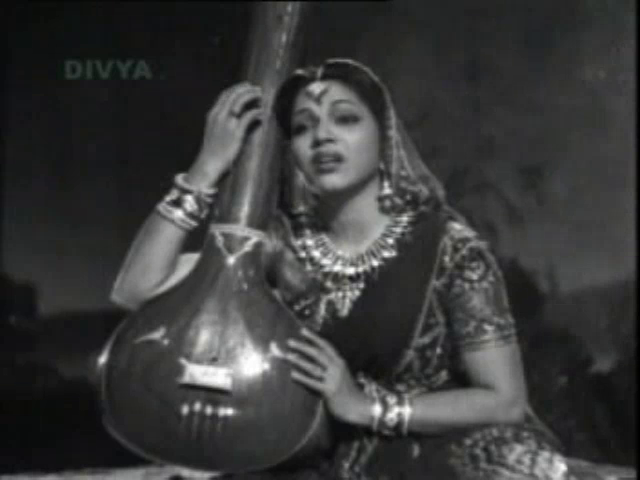
Malliswari-MalliswariB.N Reddi’s Malliswari is a film that almost every Telugu film fan praises as a masterpiece and a must see. It is so disappointing to see (and hear) the appalling state of the available copies, and also vexing that it is nigh impossible to buy on DVD. I would have loved subtitles. From the little I could pick out with my miniscule vocabulary, the dialogues seemed sensible and not overly filmi and the songs all seemed to fit in beautifully as an extension of the narrative.

Malliswari and Nagaraju grow up together in their peaceful rustic village. She calls him a monkey and he calls her a cat, but all the casual insults don’t mask their deep affection for each other. As Malliswari matures, her materialistic mother decides to nip the relationship with poorer Nagaraju in the bud. A chance encounter brings Malli to the Maharaja’s notice. In return for considerable payment, her mother hands Malliswari over to the palace as a Rani Vasam.Rani Vasam are forbidden to see or speak to men, and there was a lot of rigmarole for Malli even to see her mother and uncle. Nagaraju loses the plot, Malli mopes, but true love will not be torn asunder. When the king discovers Nagaraju and Malli have broken his rules, the penalty is death.

The female cast is superb and they all play off each other so well. Apart from Bhanumathi in the lead role, there is Kumari as the Maharani, the actress who plays Nagaraju’s mother, Rushyendramani as Malli’s mother and T.G Kamala Devi as Malliswari’s attendant Jalaja.

Based on the (rather thin) plot summary I found, I was expecting the men in the film to drive more of the action. I’m happy to be wrong about that. I wouldn’t describe this as feminist or ahead of its time, but the women are interesting and pursue their own goals and dreams. Malli is recruited into the palace against her will, but she is there because of her art as well as her beauty and is shown respect. Malli’s mother isn’t an evil shrew – just a materialistic woman who may even be motivated by wanting her girl to have an easier life. Jalaja isn’t a brainless servant, and while she and Malli become close she still cautions her against following her heart. And the enigmatic Maharani with a passion for art seems to be the real power inside the palace.

This is Bhanumathi’s film from the moment she steps into view. She gives Malliswari warmth and vivacity and is equally convincing when Malli feels sad and isolated. Her rapport with NTR is evident and I liked that Malli and Nagaraju seemed like friends as well as childhood sweethearts. In addition to her fine acting Bhanumathi also sang for herself (as did T.G Kamala Devi).

Her voice is beautifully expressive, and having the same voice for both dialogue and songs was wonderful as the songs are an integral part of the story and needed that same strong characterisation. When Malli is separated from her loved ones she yearns for happier times and for her bava, and her grief is as immediate and heartfelt as her joy had been. What I really liked was that even when Malliswari felt at her lowest ebb, she never completely gave up. There was always a spark of the vibrant and feisty girl we first met.

While NTR’s Nagaraju is important to Malli, he is often peripheral to the action so doesn’t dominate the screen as he has in other more hero-centric fare. His scenes with Bhanumathi are quite lovely and NTR’s doe-eyed charm is dialled up to the max. During a storm they take shelter in an old building, enjoying the adventure and singing to while away the time. It’s not a doom and gloom first love. When Nagaraju leaves home to make his fortune only to return and find Malli gone, he falls in a heap. Nagaraju ends up in a cave, sculpting Malliswari’s likeness and letting his hair get out of control as his clothes degrade to shreds. I found NTR’s portrayal of grief more theatrical than Bhanumathi’s and while I felt her pain I wanted to give him a bit of a slap and tell him to do something sensible instead of wallowing. I did a bit of eye-rolling in the final scenes where Nagaraju declared to the king that Malliswari was his life and he couldn’t give her up – I reckon the result had already been decided by the queen, and was based on her regard for Malli, not all the manly posturing. But this is a romance and since the chemistry and relationship building is so good, everything else diminishes.

The support cast is hard to identify due to the paucity of detail available but I did manage to put some names to faces. I thought I had identified the actress in a small but challenging role as Nagaraju’s mother, but I was wrong – so if you know her name, please share! She is a servant to Malliswari’s family and so is often a silent observer of goings on and has little dialogue to express her feelings. When she fears Nagaraju is dead or lost to her she cracks up (so that seemed to be a family trait) and goes a bit over the top, but is set to rights when her boy comes home and they can have a good cry. I recognised T.G Kamala Devi from Patala Bhairavi. I looked up her filmography and was amazed and quite delighted to see she was a billiards player, and won the Indian Womens title twice – when she was in her 60s! Doraiswamy (another familiar face, this from Devadasu) is the inarticulate father who regrets sending Malliswari away but doesn’t stand up to his wife. Kumari looks the part as Maharani Tirumala Devi, exuding confidence and a subdued energy in her scenes. Plus she gets to wear some stunning bling. I should mention Baby Mallika and Master Venkata Ramana who played the young Malliswari and Nagaraju. Both were lively and playful, and matched the adult stars well in terms of looks and mannerisms. I also liked the gossipy village ladies who always seemed to be at the well, passing comment on everyone else.

The set design is very pretty but is quite generic. I felt the actors were the real focus and the sets provided an appropriate backdrop. I really liked the episode at the fair as it was attractively shot and showed more of Malli and Nagaraju’s personalities, especially in a scene with a fortune teller. There was even a man in a bear suit. The music is outstanding, as it should be in a film about a singer. There are over a dozen songs in the film and composer Saluri Rajeswara Rao employs a range of styles to fit the scene and emotional tone. The songs are placed well and are a logical extension of the drama so they reinforce the actors characterisations. Music is always present, whether as a childhood favourite, a soulful plea to the heavens, a performance given for royalty or a simple work song to speed the day along.

There are several uploads of the full movie on YouTube and other sites. The official running time is 194 minutes but I haven’t managed to find the full version – most are missing around 20 minutes but not always the same 20 minutes. The sound and picture quality on every copy I have found is subpar. But if you can persevere with the technical issues, this is a beautiful film and a firm favourite of mine. Bhanumathi is superb, NTR is a perfect foil for her, and B.N Reddi blends everything into a very charming story with love and music at its heart. 5 stars!