 It was only the hope that Karthik Subbaraj would manage to at least equal his excellent début film Pizza that got me out of the house on a cold, wet and windy Melbourne night. But in the end it was totally worth the trek across town to catch Jigarthanda and watch Bobby Simhaa completely steal the show as the slightly unhinged gangster Sethu. Siddharth, Lakshmi Menon and Karunakaran round out the lead cast with excellent support from a multitude of actors, including a special appearance from Vijay Sethupathi. It’s quite a long film and I felt that perhaps the final scene wasn’t absolutely necessary, but for the rest of the 2 hours and 50 minutes I was completely mesmerised by a rather different take on the blood and guts gangster film.


Siddharth is Karthik, an aspiring young film maker who has been given the chance of a lifetime to have his first movie financed by a leading producer (Naren), just as long as it’s an Indian version of the Godfather. This isn’t quite what Karthik had planned as his début feature, but after his reporter uncle tells him about a particularly psychotic goondha in Madurai, he decides that he has found his perfect muse and heads off to the city that never sleeps to develop his script.
 Luckily Karthik’s friend Oorni (Karunakaran) has space in his house while his pregnant wife is away, and Karthik loses no time in moving in and plotting a way to reach ‘Assault Sethu’. Given that the opening scenes include a brutal and fairly horrific murder by the gang, this doesn’t really seem to be a very safe plan, but over Oorni’s quite sensible objections Karthik starts to stalk various members of the gang in an attempt to get close to Sethu. The first half of the film mixes equal parts of comedy and action as Karthik and Oorni bumble around ineffectually trying to discover more about Sethu’s early life, while Sethu and his gang very efficiently do what any self-respecting psychotic Madurai bad guys do to earn a daily crust. Amid all the mayhem, Karthik runs into Kayal (Lakshmi Menon), who has an interesting side-line which puts her on the shady side of the law, although she mainly helps her mother providing food for the gang. This potentially gives Karthik a way into Sethu’s world although it doesn’t quite work out the way he plans.


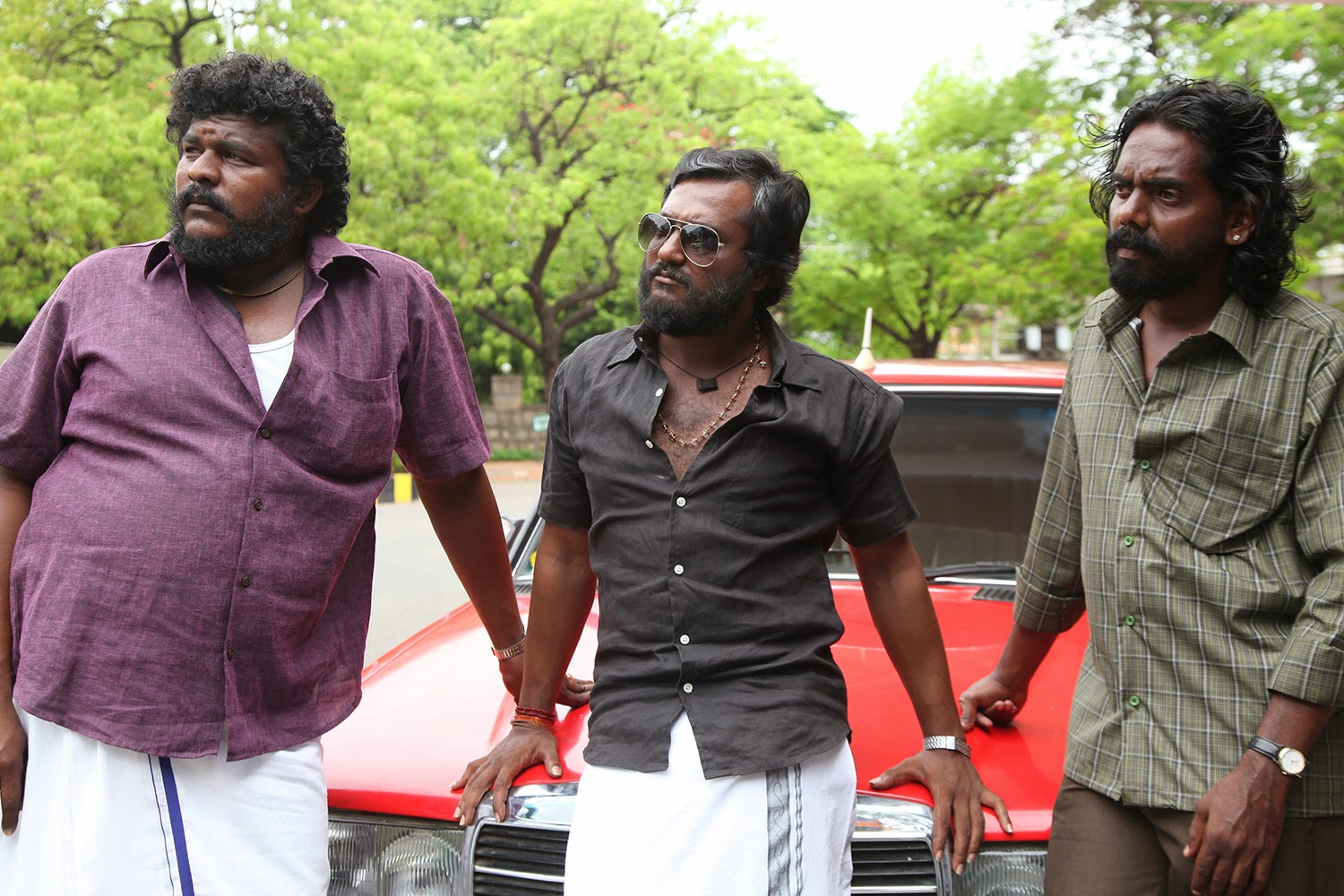
Siddarth is much better than I was expecting as the rather nerdy and intellectual film maker who is initially childishly thrilled by his exposure to the darker side of life and the excitement of gangsters in the flesh. The inevitable change to horror as the reality of Sethu’s brutality and unpredictable viciousness becomes only too apparent is also well depicted, while his portrayal of Karthik’s despondency and resigned acceptance in the second half is pretty much perfect. There is some excellent writing here as Karthik’s character is perfectly represented by the script, and Siddharth adds charm and general likeability along with technical prowess. Alongside Siddharth, Karunakaran is impressive in a role that seems made for him, and his bumbling friend persona drives much of the comedy with very funny one-liners. The various gang members also get plenty of one-liners and there is some excellent situational comedy, particularly in the second half, which is frequently unexpected but beautifully written into the main storyline. The gang seems composed of the usual suspects in such films, but they seem even better than normal here. Perhaps it’s because they get a chance to be three-dimensional and they have definitive and separate personalities here which helps drive the story and has the added bonus of providing more background to the character of Sethu.
 Lakshmi Menon doesn’t have a very big role in the proceedings but her presence proves to be pivotal in a number of instances and her character is generally realistically depicted. She makes an impact even with her limited amount of screen-time and definitely holds her own against the rest of the mostly louder and brasher cast. She’s certainly not just a love interest and I do like the way Karthik Subbaraj includes his female characters as having a definite personality and not just defining them by their relationship with the hero, even if he still doesn’t manage to give them much of a role in the story.


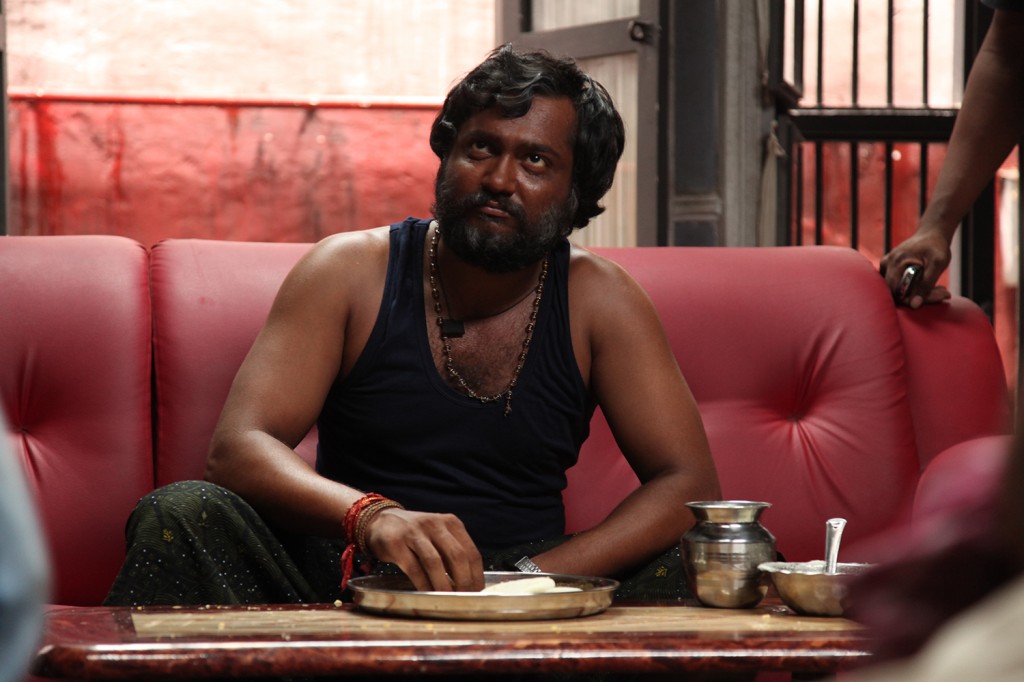
The real star of the film though is Bobby Simhaa, who growls and menaces convincingly as a cold-hearted killer and somehow manages to genuinely appear unstable. Some of his best moments are undoubtedly as he narrates his past murders to the camera when he is frighteningly chilling, but Simhaa also delights in scenes where he is attempting to act, or deal with the attempts on his life from other gangsters in Madurai. He switches effortlessly between drama, action and comedy and so much more besides. It’s an absolutely inspired performance in a cleverly written role which really does encompass almost every possible reaction as the story unfolds.
 The film also benefits from excellent camera work from Gavemic Ary along with clever use of the different sets to help develop the various characters. Santhosh Narayanan’s soundtrack sounds modern and edgy, yet fits perfectly into the film, while the background score enhances the visuals without becoming overpowering. Generally the songs are used as background for story development with only one full choreographed number in the film – but it is well worth waiting for. After all, it’s not often you get to experience an Indian brass band playing along with dance performances from a rowdy and cut-throat group of gangsters! Pandi Naatu Kodi makes a brief appearance in this trailer and it is just superb!
Ultimately, Jigarthanda succeeds because of Karthik Subbaraj’s intelligent and well plotted storyline which features plenty of unexpected twists, novel situations and a very funny script. Although there are distinct differences between the two halves of the film, there is plenty of black humour throughout and the mixture of comedy and action overall works well in delivering an entertaining film. I still think it could have been 10 minutes shorter and delivered just as effective an ending, but Jigarthanda is definitely one of my top movies of the year so far and I’m already putting the DVD on my wishlist. I highly recommend watching in the cinema if you can – it’s really that good!















 Cinema Chaat