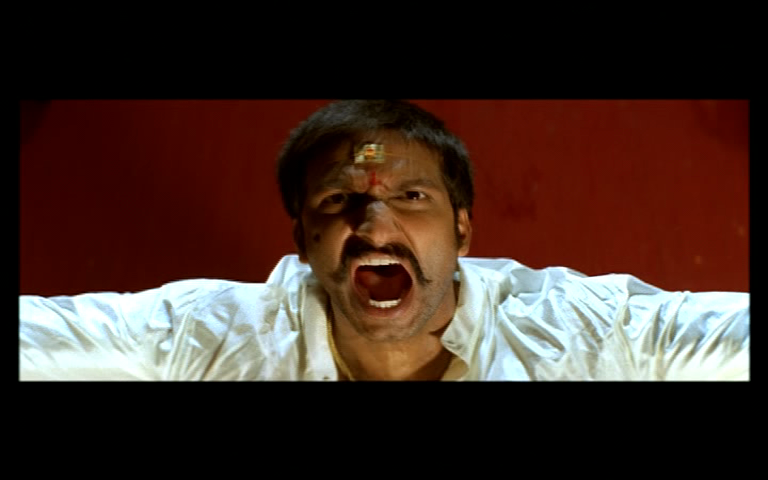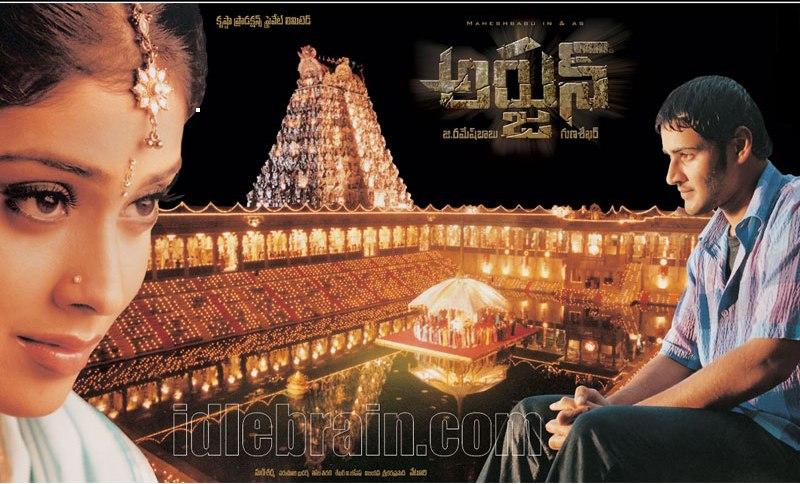
Arjun

 Arjun opens with a bleeding and intense Mahesh Babu staring down the camera. We see a bloody blade, and a gang of rowdies running towards him as he waits in a downpour of rain. It’s a gripping start.
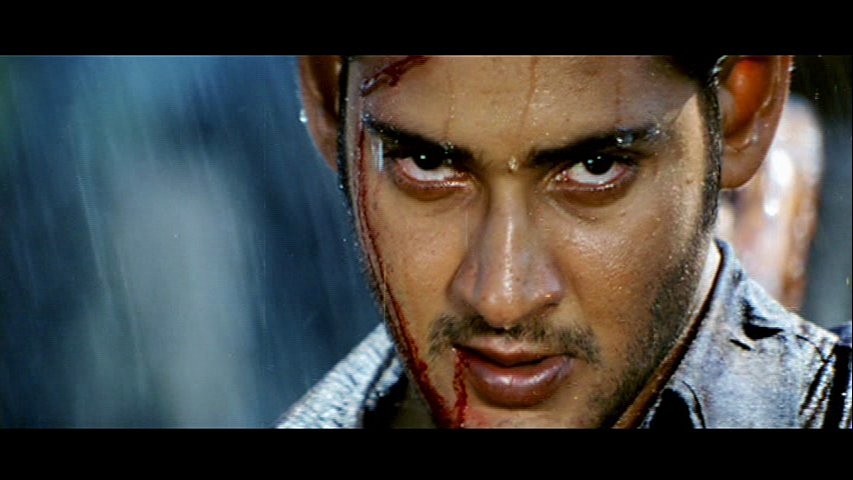
Which then gives way to a happy inspirational song and a flashback. After he kills those rowdies of course. A flashback narrative structure can often diminish the drama as the viewer knows the end point. In this case, Gunasekhar uses the form to heighten the tension. While things had obviously gone wrong, the details emerge gradually. We know Mahesh is waiting to deal with his enemies, but it takes time to discover who they are and what has happened.

Often in a big star vehicle, the supporting characters are mere sketches. But Gunasekhar has populated the film with memorable people played by excellent actors.  As in the previous Mahesh/Gunasekhar project, Okkadu, there is a strong web of relationships that makes it much more engaging. Arjun (Mahesh) is a protective twin determined to look after his sister Meenakhi (Keerthi Reddy). He isn’t one of those sociopath heroes who exist in isolation. There is a pleasantly lived in look to the family home, his office worker parents wear slightly dowdy clothes, and their story is firmly middle class. It’s refreshing to have a hero with a family and to see a sister be more important than a prospective girlfriend. But they are not angels.

Dolce – this is for you!
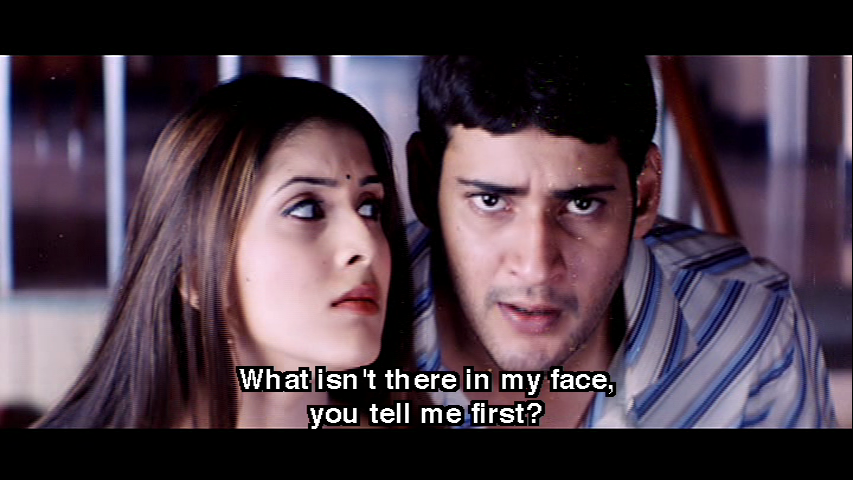
As always, a film hero who kills bad guys is not doing anything really wrong so we needn’t be troubled by morality. But there does seem to be recognition that there are always consequences. Certainly there is a different rule for the baddies, and especially if they kill good people.

Prakash Raj is Bala Nayagar, a Madurai based bigwig. His wife, played by the still striking Saritha, is his perfect life partner Andal. She knows what he likes to eat, his moods, and when to kill people who annoy him. When their son Uday (Raja) wants to marry college sweetheart Meenakshi they are furious as his engagement to a rich girl had been fixed. The couple are enthusiastic but only moderately successful killers, and many of their schemes to remove Meenakshi fail to comedic effect.
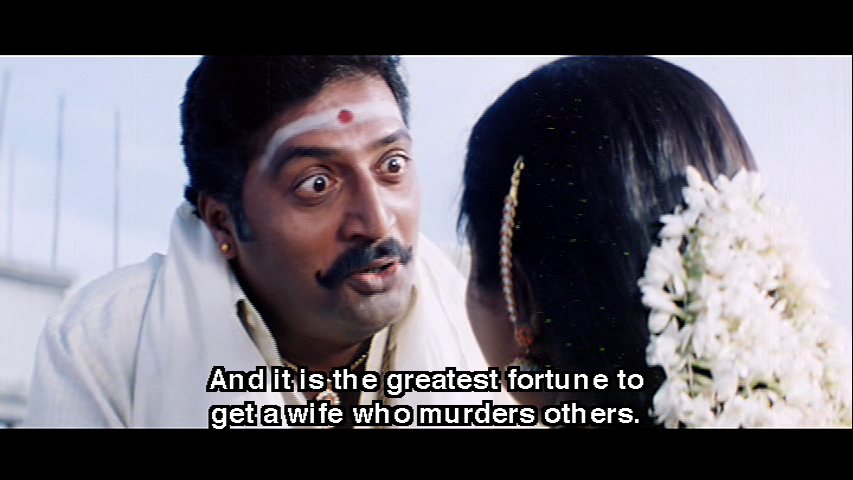
Saritha and Prakash Raj seem to have a side bet on who can out-over-act the other and are great fun. But despite the often ludicrous shenanigans, they each have an intensity that makes them genuinely menacing at times. Prakash Raj can turn from jovial to chilling calculation in a blink and Saritha is his match.

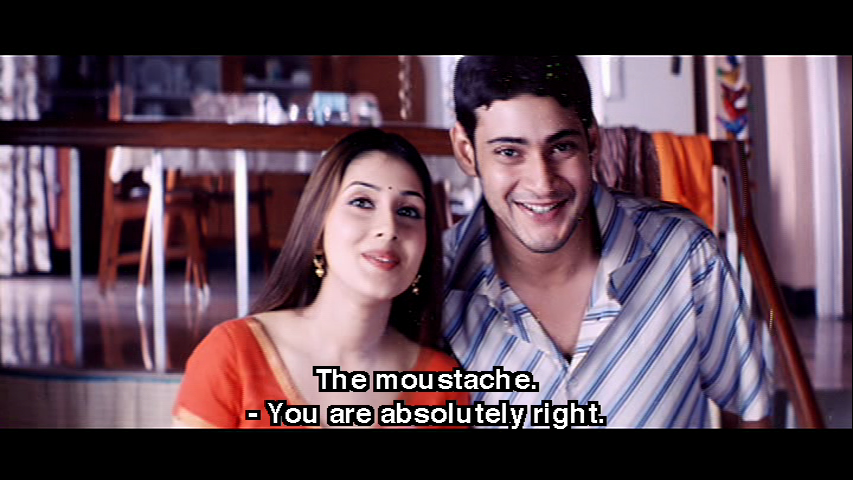
Mahesh also crosses paths with Rupa (Shriya) – a very annoying girl who invites her own downfall by….blowing a kiss at him. Yes! This cannot be allowed without some form of payback. How dare she! The only way honour can be satisfied is if he stalks her, then harasses her until she marries him.
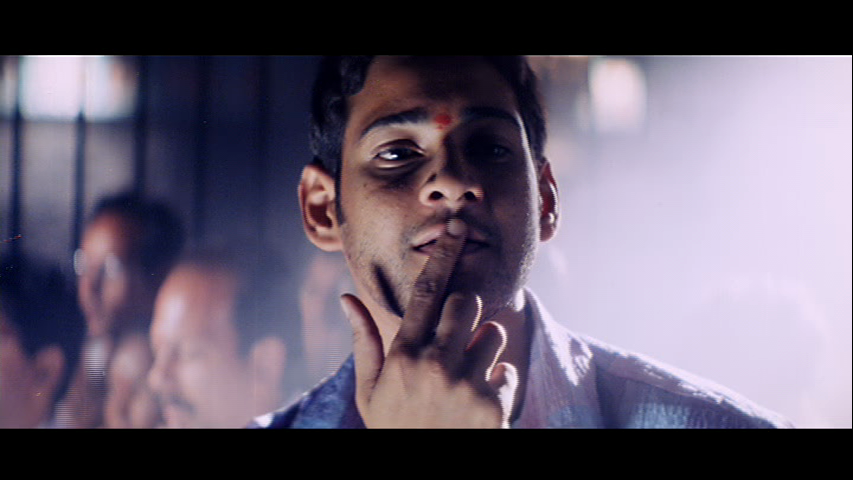
The romances play out very differently. Meenakshi and Uday love each other but neither feels they can upset their parents’ plans. Arjun lays down the law – Meenakshi will not elope and if Uday wants her, he has to tell his parents and all must be done out in the open. This is how he introduces her to the Nayagars. The song gets full points for colour, movement and excellent use of locations. Plus – parrot costumes.

There is a theme of blood being thicker than water, and even before things start to take a turn, Arjun is determined not to abandon his sister once she is married. Meenakshi is in peril, often unaware of the danger and even defending her in-laws much to her twin’s dismay. Keerthi Reddy has a nice rapport with Mahesh although her role dwindles once she enters her in-laws home. She has some intense scenes as she shows her pain at her brother’s actions. Although Meenakshi is often passive, it rarely seems that she is passive through a lack of sense. As with some other characters in the film, it is a blend of mass genre cliché and soap opera – this time damsel in distress mixed with modern bride meets traditional family. The parallel of Meenakshi as a divine being and as his sister is not lost on Arjun. The goddess gives comfort and support when his sister turns away, and maybe a small nudge of coincidence.

Of course, Rupa lives in Madurai with her domineering dad (Tanikella Bharani). Arjun’s pursuit of Rupa at first seems more about putting her in her place than any romantic attachment, but it is amusing. I am also grateful to the subtitle team who kindly explained the wordplay.
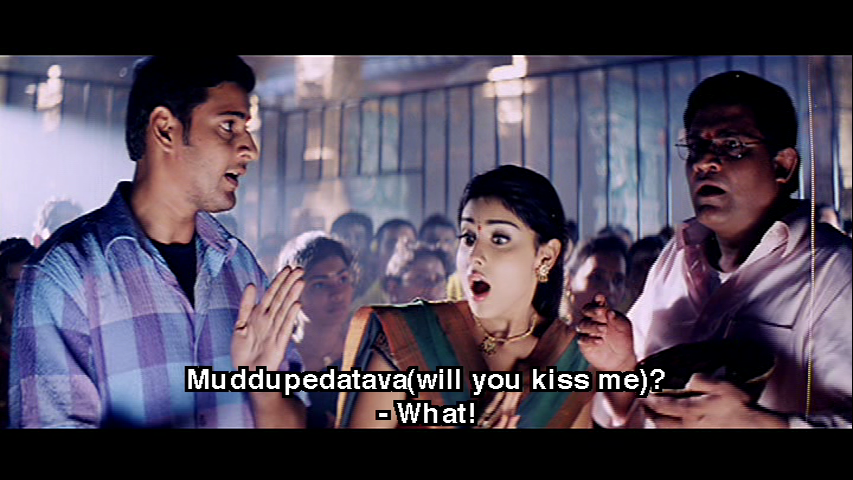
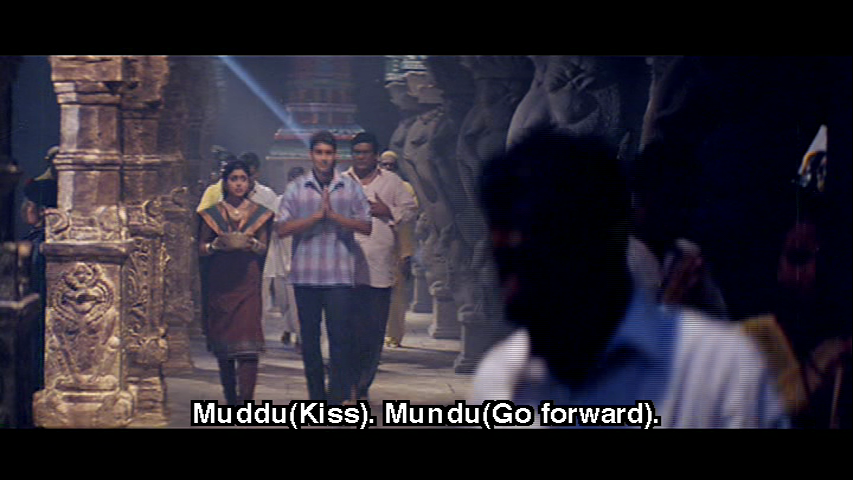
Rupa is a really silly character but she does gain appeal over time.  She offers to help Arjun when he is at a low point, which makes him see her in a new light (perhaps the light of her doing what makes him happy). Shriya gives a very energetic performance, initially edging onto the Genelia Manic Pixie Dream Girl scale but kind of endearing once she settles. One thing I like about Shriya is that she never seems overawed by her co-stars, and she just goes for it and claims her bit of the screen. She withstands a varied but determined assault by the wardrobe team in the songs. As a couple she and Mahesh have some chemistry but mostly they seem to have fun in their dances. This is my favourite of their duets, choreographed by Lawrence.

Mahesh is superb. His anguish over Meenakshi and his playfulness with Rupa are equally believable, and no one emanates fury like he does. Thanks to a thoughtful screenplay, Mahesh has room to act as well as showcase his heroic chops.

He uses his lanky frame and the baby faced killer stare to great effect. Some scenes with Meenakshi were really emotional, and he showed the conflict and worry that drove Arjun. It helped give the eventual denouement a much greater urgency and sense of consequence. It also made his super killing powers seem almost believable as it was clear Arjun was desperate to protect his sister at any cost. He did seem to wear more layers of shirts as the film progressed. Was this a visual representation of his attempt to stave off external threats? Or just a change in the weather? But his shirts were not the only item of clothing to make me look twice.

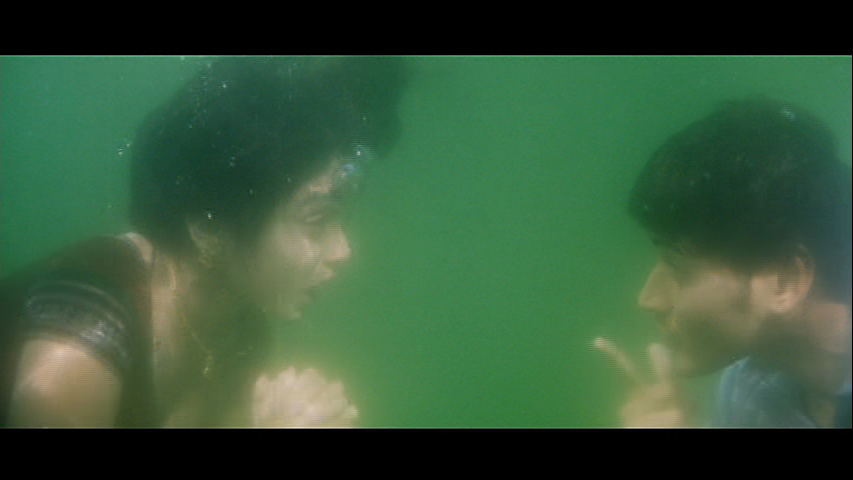
The excellent fights directed by Vijayan range from almost lyrical to frenetic. Even his mother gets Arjun to sort out bad guys for her so his skill and bravado have some basis in the story and aren’t just a post-interval acquisition. Arjun has a fairly laconic style, always looks like he knows he will win, and he can fight under water which is very handy indeed.
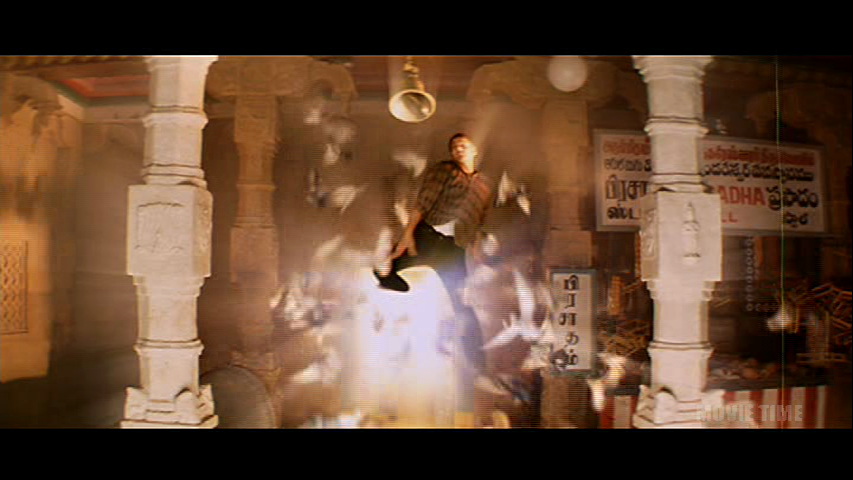
Admittedly, I have doubts about why no one can see him in what seems to be a fairly clear pool, but whatever. The climax of the film is dramatic, suspenseful, over the top and totally improbable but completely compelling.

The Madurai set has stunning architecture and decorative flourishes and the crowds provide concealment, camouflage and distraction. The film combines the lush visuals of the temple set with opulent interiors, the intense jewel like colours of silk saris and excellent lighting. The camera work and edits are in keeping with the tone of each scene. The CGI, while a bit dodgy, was used for maximum impact. The soundtrack is OK but I remember the picturisations more than the music so I wouldn’t say Mani Sharma had done anything outstanding.

See this for fine actors, great visuals, exciting action and of course a hero you can count on. Mahesh delivers – Arjun is a winner! 4 ½ stars.

Heather says: While I didn’t enjoy this as much as Temple I think it’s an interesting story and the relationship between Arjun and his sister is well developed. Mahesh is excellent as the faithful brother who will do anything to keep his sister safe and happy and it’s really his performance which makes this more than just a run of the mill action film. I also liked Kirti Reddy  as Meenakshi and thought her early scenes with Arjun were convincing in showing the rivalry and the affection between the two

I did find it a little incredible that Arjun’s mother Kamala was quite happy to set her son up to face a room full of rowdy’s and then walk away and leave him to it.  While I appreciate her faith and confidence in her son, I’m more inclined to agree with Meenakshi’s view that it wasn’t a very responsible attitude for a parent to have. It was a quite a novel approach though and as Temple mentioned, did set up the fight scenes for the rest of the film very well.

I loved Prakash Raj here as the father intent on marrying his son to his best advantage, but he was totally outdone by Saritha as his wife. She was fantastic in her obsession with the 1001 crore dowry and her expressions as she was either murdering someone or extorting her husband to murder were brilliant. Combined with Kamala, this has to be the film with the blood-thirstiest mothers I have seen and they both added a totally new dimension to the filmi ma character. I loved them!

On the negative side though, I couldn’t understand the point of Shriya’s character at all. It doesn’t help that I really don’t like her as an actress, but the plot with Rupa seemed to be stuck on as an after-thought. I don’t think a romance was necessary, particularly since her character had no relationship to anyone else in the plot, and it could have been omitted without any disruption to the rest of the story. My irritation with Rupa in this film was inversely proportional to the amount of clothes she was wearing. In the opening sequence while she was teasing Arjun wearing skimpy clothes she was incredibly annoying and I really hated the first song with her. Later on, when she was more modestly dressed in a sari I was better able to ignore her and her presence wasn’t quite as grating.

While the main story of Meenakshi’s marriage and murderous in-laws was engaging and the action thrilling, there was a little too much fluff in the rest of the story for me to become totally engaged with the other characters. A winner in terms of Mahesh’s performance and worth seeing how Gunasekhar proves Arjun can walk on water. 3 ½ stars.

7 Aum Arivu

After reading all about the buzz with 7 Aum Arivu, this was the film I was most looking forward to watch this Diwali. Especially since we had the promise of English subtitles for the first time for a Tamil film in a mainstream cinema release here in Melbourne. However there was so much hype in the build-up to its release that it was almost inevitable that it would fail to meet my high expectations. Despite an interesting concept and a generally good cast, the film pacing is slow with too many gaping plot holes to be anything more than just an OK watch. But there are some good points along the way and finally seeing a Tamil film in the cinema (with subtitles) is a definite plus. This is the first time I’ve seen Surya on the big screen and he certainly makes a good impression. The action scenes are well shot and I’m always happy to see a heroine who is capable of more than hand wringing, sobbing and looking helpless. I just wish they had spent more time on the actual plot and less on the set-up which takes up most of the film.

The film starts with an almost documentary style depiction of the life of Bodhidharma – the 5th century Tamilian monk who reputedly was the founder of the Shaolin temple in China. The documentary feel comes mainly from the interview style used and the lecturing voice-over as 150 years is neatly compressed into 20 minutes. The entire story is treated as factual although a quick internet search shows there appear to be a number of different versions around and no clear agreement on Bodhidharma’s lineage. But that really doesn’t matter here as the point is to illustrate Dharma’s expertise in war craft, medicine and hypnotic techniques, which these opening scenes do very well. Surya is perfect as the Pallava prince who journeys to China to become the ‘blue-eyed barbarian’. Yes, I did notice the blue contact lenses. Much is also made of the fact that people in China know exactly who Bodhidharma was while the Indians interviewed had never heard of him. This lack of knowledge of Tamilian heritage and history by people in India is pointed out a few times throughout the film and does become a tad wearing after a while.

Once the story of Bodhidharma has been established, we are transported back to the present day where an assassin has, rather improbably, been sent from the Chinese government to deal with a troublesome scientist and to initiate something called Project Red. The assassin Dong Lee (Johnny Tri Nguyen) is the top student of Kung Fu from the Shaolin temple and apparently an expert in all forms but seems to prefer the use of hypnosis where possible.

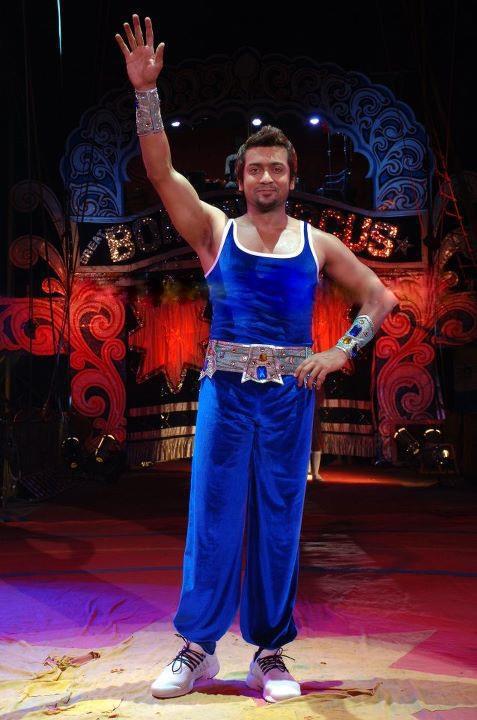
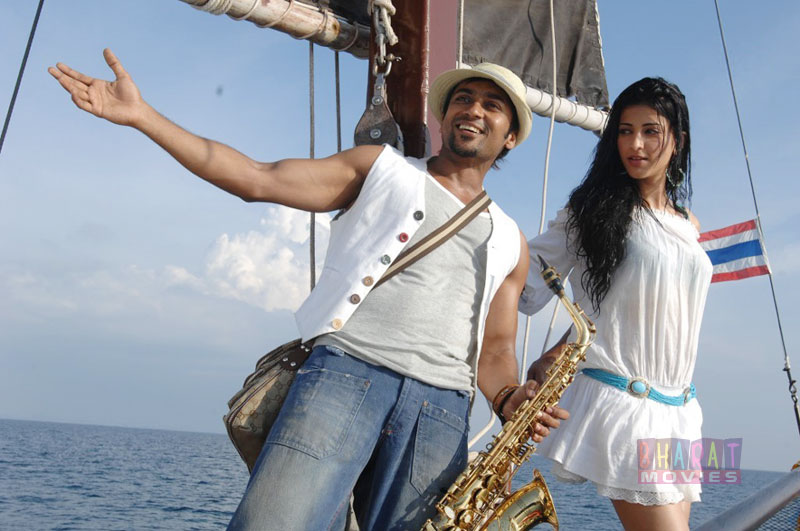
The scientist in question is Subha Srinivasan (Shruti Hassan), a researcher in the field of genetics whose work involves manipulating genes to resurrect DNA encoded attributes such as the fighting techniques and medical prowess displayed by Damo. Subha has tracked down the descendent of Damo who is most likely to be suitable for a little gene manipulation and he just happens to be the circus performer and general layabout Aravind (Surya). While Aravind thinks he has managed to trick Subha into meeting him to further their relationship, in fact she has been stalking him for over a year and has a scary collection of his discards including a tooth brush to show for it. It makes a change for the hero to be the victim of some determined stalking and I liked this deviation from the norm. Strangely Aravind is not as upset by the stalking as he is by the realisation that Subha doesn’t love him but just wants to get at his genes. Although from my SI filmi education so far I thought that stalking was supposed to prove true love but maybe I’ve just got it all wrong?

Not only has Subha been collecting Aravind’s DNA, but has compounded her dishonesty by stealing  a book from the local museum to further her research. It’s no surprise then to discover that her project doesn’t get past the local ethics committee although their reasons for rejecting her are more based on her youth and lack of kow-towing to their authority rather than her actual unethical approach to research. I found a lot of the science very funny since I do actually work as a medical researcher, often alongside geneticists, so have more than a passing knowledge about the subject. So while a lot of the science is very dodgy and eventually becomes implausible, it does have some basis in fact and it’s a relief not to have too much dumbing down of the subject matter. However the most unrealistic part of the film for me is Shuba’s apparently unlimited source of funds for her research – now that really was unbelievable!

Having learnt that Subha was only interested in him as a human lab rat, Aravind is devastated and mopes around theatrically (well he is a circus performer) until he finds out about the threat from Project Red. Dong Lee is also trying to assassinate Subha and decides Aravind needs to be removed too in order to guarantee the success of his mission. In between saving Subha and trying to save the world, Aravind barely has time for Subha to genetically transform him into Bodhidharma.

The first section of the film detailing Bodhidharma’s exploits in China is definitely the best part of the film. There is very little dialogue and Surya makes the most of his very expressive eyes to convey the various trials Bodhidharma has to undergo. While copious amounts of research appear to have gone into the making of the film, in this section it has paid off and it makes for a strong opening. Sadly though this isn’t maintained. The story has a lot of potential as it mixes science fiction with a disaster movie theme and a dash of Indian masala romance but it doesn’t quite gel. The plot rambles over the first half and it takes far too long to find out exactly what Project Red is and why Subha is a threat to the Chinese. The romance doesn’t work very well as a plot point and there is very little chemistry between the two leads. However I think this is intentional as Subha tries to keep her distance from someone she essentially sees as a walking experiment but there was a lot of time spent developing this non-relationship which slowed the story. There also doesn’t seem to have been any need to make Aravind a circus performer other than to make Surya learn a few new tricks since the whole circus background is totally abandoned in the second half.

Shruti Hassan is fine as the researcher and committed geneticist. She has plenty of passion and is able to convey the obsession necessary for Subha’s research although this does make her lack of enthusiasm in her romance with Aravind more obvious. She is particularly good in the confrontation scenes – those with the research committee and also with Dong Lee. Her character is strong, decisive and capable all of which she handles with ease.

Johnny Tri Ngyugen has excellent presence as the villain and exudes chilly menace. However there is a little too much reliance on his super hypnosis and not enough good old fashioned kick-ass kung fu for my liking , and this  slows down the action sequences. In one scene, where he hypnotises a large number of innocent bystanders and sends them after Aravind and Subha like destructo-robots, he keeps attacking for much longer than any respectable villain should allow before realising that the technique isn’t working and a change of tactics is in order. Perhaps it’s my over exposure to Southern Indian cinema but Peter Hein is an excellent action choreographer and I wanted to see more actual fighting between Dong Lee and Aravind. The few fights they had were worth waiting for though and I did enjoy the final sequence despite the overtones of Crouching Tiger, Hidden Dragon.

The soundtrack by Harris Jayaraj is great and I do love the songs, but while they are generally well pictured they don’t fit easily into the narrative and only serve to further disrupt the story. The exception to this is the first song ‘ Oh Ringa Ring’ which is fun and a good introduction to the character of Aravind. The songs are however the only time Aravind and Subha have any chemistry together so perhaps that’s one reason for leaving them in.

The screenplay by director A. R. Murugadoss is the main problem with 7 Aum Arivu as the film takes so long to get going once it moves to the modern era, and then is full of plot holes and unlikely scenarios. The last few minutes are dedicated to moralising about history and having pride and belief in your ancestry referring back to the lack of knowledge in India about the life of Bodhidharma. It seems very ‘Hollywood’, which seems to feel the need to deliver a sermon along with a happy ending, and didn’t seem to fit into a film which ends up being more masala than perhaps is intended. It’s still worth watching for the opening scenes and good performances from the leads, but just don’t expect too much from the actual story.

Varsham

I do really like Prabhas. He always seems to be a little surprised to be the hero of any film and with his height and general gangliness he has a ‘St Bernard puppy’ type of cuteness that is very endearing. Even though his films seem to follow a similar pattern, he brings enough personality to each character that I’m usually happy to watch no matter how many plot holes or illogical scenes there seem to be and this film does have a few of those.

Varsham is a typical Prabhas action/romance movie. The story involves two guys fighting over the heroine like dogs over a bone, with each one growling ‘she’s mine’ at appropriate intervals. But when one of those two is Prabhas and the other is Gopichand it’s suddenly a lot more fun. Add in Prakash Raj as ‘Prakash Bad Dad’ and it’s much more entertaining than it first sounds.

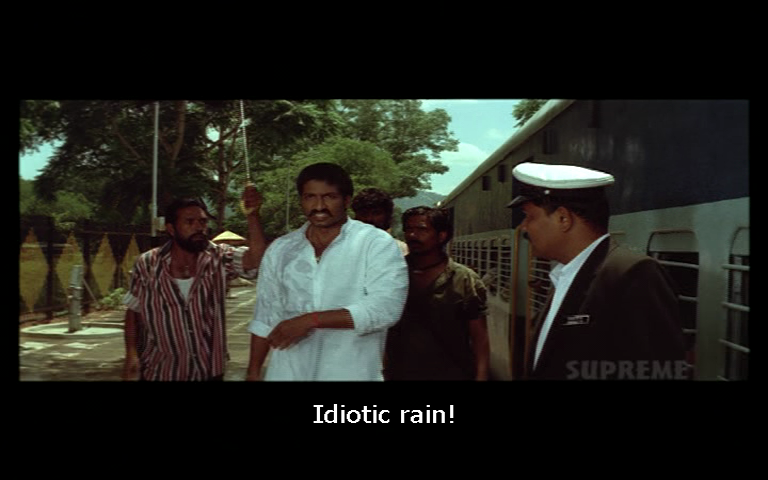
Trisha plays Sailaja, the girl who both Venkat (Prabhas) and Bhadranna (Gopichand) lay claim to. Sailaja is a fun-loving girl who adores the rain, and I fully understand and endorse her compulsion to dance in it at every possible opportunity. Venkat and Bhadranna first both see her at a train station where their train has been delayed. Once the rain starts Sailaja leaps out onto the platform to dance with total child-like abandon. She follows the ‘dance as if no-one is watching’ creed, despite the fact that everyone is actually watching her and this is a very fun song with plenty of dorky moves by Trisha. There’s a great pigeon move in here too and I’m very impressed by Trisha’s grasp of the bird-impression genre of dance step.

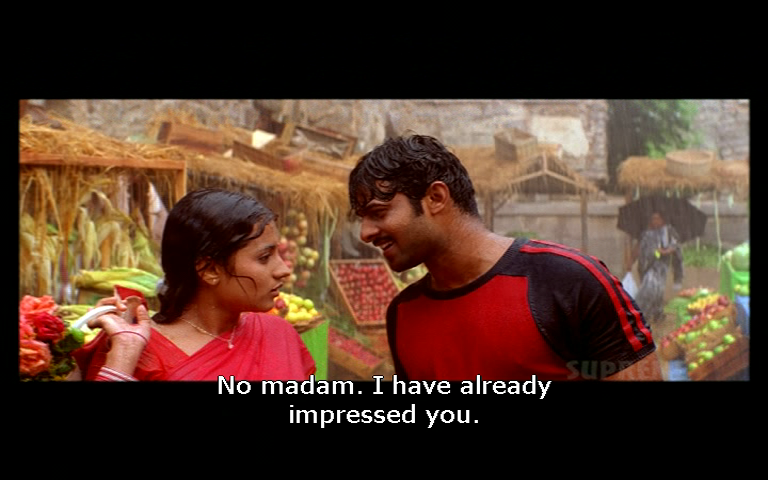
Venkat and Sailaja are separated as the train moves off, but find each other the next time precipitation hits their local market in Warangal. Since the rain seems to bring them together they make a pact to meet again when it next pours. However, just as the rain clouds form again there is the small problem of Bhadranna who has come to Sailja’s house to arrange marriage with her.

Sailaja’s father Ranga Rao (Prakash Raj) is a drunken gambler who wants to make the best use possible of his daughter to fund his chosen life style. But while Bhadranna has schemed to put Rango Rao in his debt, trying to use his weakness for gambling to force Sailaja into marriage, Rango Rao is one step ahead.  Luckily, a film producer has seen Sailaja and is desperate for her to act as his latest heroine. This will naturally pay extremely well, plus hopefully be a source of revenue for years to come, so Ranga Rao is in no hurry to marry his daughter off. And despite appearances, Ranga Rao is wilier than Bhadranna gives him credit for.

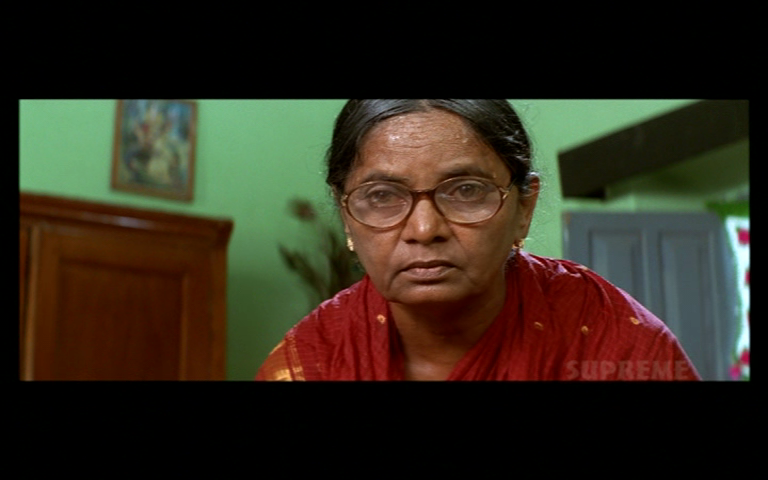
He plays Venkat and Bhandranna off against each other, reasoning that he can use Venkat to get rid of Bhandranna and therefore his debt, and then separate Sailaja and Venkat. This is exactly the path he follows and even when his daughter is later kidnapped by Bhadranna he’s still tries to make the situation turn out to his advantage. Luckily for Sailaja she has the support of her feisty and opinionated grandmother who has a very low opinion of her son-in-law. It’s also a pretty accurate one. Sailaja’s mother is a bit of a wet blanket and unable to take a stand against her scheming husband, whereas her grandmother actively supports her relationship with Venkat and obstructs  Bhandranna as much as she can.

Bhandranna doesn’t stand a chance though – he has entirely the wrong opinion about the rain. Unlike Venkat who has a much better appreciation of the things that matter to Sailaja.

Although the story itself is nothing new, the appeal here lies in the performances of Prabhas and Trisha who really do bring their romance to life. They have great chemistry, especially in the songs and the love story comes across as natural and unforced. After all as Sailaja puts it, Venkat is tall and handsome – what more does a girl need? Their first meetings in the rain are beautifully captured and make good use of the hazy lighting. In the later scenes Prabhas is all action, which he does so well, especially with the great fight scenes choreographed by Peter Hein. But Sailaja fights back too and isn’t at all a typical sobbing heroine. I really like her characters attitude even if she is a little too gullible when it came to her father and too ready to believe the worst of Venkat. I also appreciate the references to the Ramayana throughout the story. The kidnap theme is a straight take from the Aranya Kanda, but there are plenty of other references. These range from Bhandranna trying to change the outcome of the story in a re-enactment at his mansion, to the final showdown involving a large Ravana cutout, which all add yet more layers to the story. I love the songs by Devi Sri Prasad and they are generally well placed in the movie. The best are those with Venkat and Sailaja in the rain, although I do like the multi coloured chicks in this song, and both Prabhas and Trisha look to be having fun.

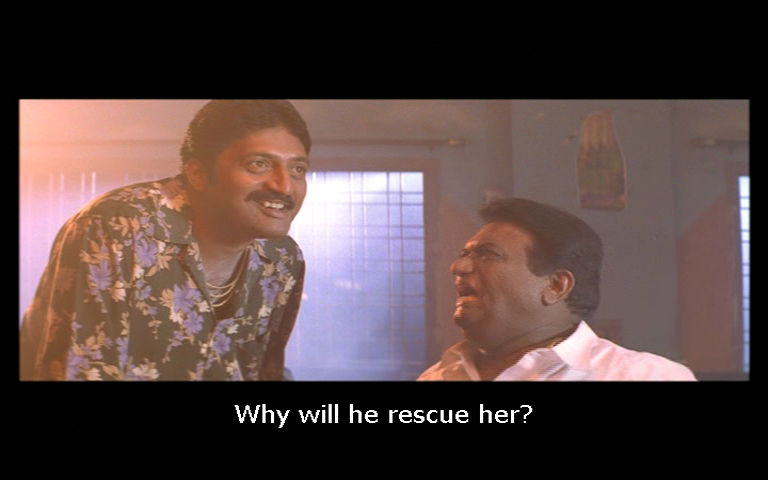
But despite my love of Prabhas, Prakash Raj is the scene stealer as the selfish and greedy father. He has a habit of running his tongue over his crooked canine tooth while he is scheming and it becomes quite mesmerising after a while, acting as a gauge of just how manipulative he is planning to be . Ranga Rao also has a collection of very loud shirts and the combination is enough to put him into the ‘bad dad’ faction even before he starts his fake suicide attempts and general bribery of his daughter. Jayaprakash Reddy as the producer aids and abets Ranga Rao’s plans in order to get his film made and the two have some of the funniest scenes in the film.

There is a small separate comedy track involving Sunil as Venkat’s friend Jagan and his quest for romance. Since Sunil is another favourite and the comedy is inoffensive and not too intrusive it doesn’t detract from the rest of the film for me. Ajay also turns up as one of Prabhas friends which is another point in this films favour although his character is of the blink and you’ll miss him variety.

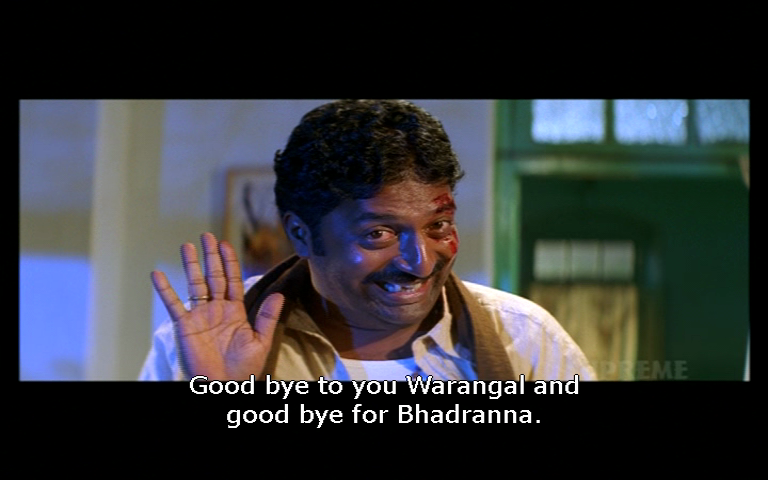
Varsham is the first time I’ve seen Gopichand act, and I think he’s excellent as the villainous Bhadranna. He’s not overtly evil, but you just know he’s the sort of person who pulled wings off flies as a child. OK, killing his father was the first clue, but most of the time he’s rational and normal until you look at his eyes, or he suddenly snaps and casually kills someone. Bhadranna is the centre of his world and the sooner everyone around him realises that and falls into line, the easier it will be for them.  Shafi has a small but important role here as Bhandranna’s step-brother Kasi, and he’s sleazy  and fanatical enough to make his initially pitiful character quite obnoxious by the end. It seems to be his special talent.

Great songs, crazy fight scenes (Venkat has amazing bullets that manage to flip jeeps), Prakash-Raj-bad-dad and a very sweet romance make this one of my favourite Prabhas movies. It’s worth watching for the beautiful rain shots alone but Trisha and Prabhas are excellent together in this film.  4 stars.

Temple says:

The structure of the simple story was quite good, and I like the overt Ramayana references. Bhadranna demanding that the local actors change the script to allow Ravana to tie the nuptial thread around Sita’s neck was just one of many signals that he was the real deal when it came to insane villainy. But the heroic Prabhas was just as demanding. Venkat was the type of hero who expects to be worshipped and he had no tolerance for people questioning him. In many respects there isn’t that much difference between hero and villain as they are both self centred and moody. Prabhas has a very likeable presence when he isn’t sulking or killing people, while Gopichand has a harder edged energy. It was the actors who made that dynamic work as apart from flagging Venkat as ‘poor but honest’ and Bhadri as ‘eeeeevil but artistic’, there was little else in the script to develop the characters. The small scale of the drama and the characters’ dreams made the film a little more engaging and plausible. The character actors were pretty good and helped paper over some of the plot holes just by being believable in their supporting roles. Prakash Raj was good but not great. I found his characterisation fluctuated between extremes of buffoonery and cunning and it didn’t feel cohesive. If he had dialled it down a little in some scenes, the sly con artist and schemer aspects of Ranga Rao would have been more convincing. My first thoughts on seeing Trisha cavorting around in the rain went along the lines of  ‘Hello..an escaped mental patient.’ Why do Indian film directors seem to associate carefree innocence with behaviour that is borderline crazy? And that is pretty much the last thought I gave to Trisha. She was adequate but I think almost any actress could have delivered that performance. There is rather a lot of kissing (seen and implied) although there is minimal chemistry between the stars, even with Trisha licking melon pulp off Prabhas’ face.

The songs are colourful, and Prabhas and Trisha incurred the wrath of the wardrobe team in some of the picturisations which made them extra entertaining. Prabhas’ signature dance steps seem to be stomping or undulating and he often got to do both. Sometimes while wringing wet. There are some nice little details in the design, and I liked seeing Bhadranna still using a gramophone – so stylish and retro. The action scenes were good, and I appreciated Venkat’s dedication to leaving no car unturned in one encounter. Prabhas is very comfortable as an action man, and tackles the fight scenes with gusto.

This is a pretty run of the mill romantic drama and while it was a perfectly acceptable timepass, there is little to set Varsham apart. 3 stars.